|
| Southern Pacific Railroad Route Map, 1908 |
The history of live rock and roll follows the railroad. It doesn't seem like it does, since rock and roll, particularly '60s rock and roll, was from the era of the automobile and the airplane, particularly the jet airplane. Trains, admittedly, had little to do with it. But the railroad--well, the railroad was a different matter. Railroads defined the transportation geography of the United States, and particularly the Western United States. Since psychedelic rock and roll emanated outwards from California, it follows that the structures of California railroads in the 19th century defined the geographic contours of the following century. I could write a book about this--maybe I will someday--but for now, you'll have to take my word for it.
The map above looks like a freeway map of California. But it's not. It's a Southern Pacific Railroad Route Map from 1908, focused on California. Los Angeles is at the lower left, and the tracks peel away through Central California. But the railroad defined the important cities, and when roads started to take over transportation in the 1930s, highways had to connect the cities that had been created by the railroads. So the Highway system was built on the path of the railroad. Now we recognize the roads from Los Angeles as US-101 on the Coast and I-5 through the middle of the state. Interstate 5, however, is a later development. It wasn't started until the 1950s and was only completed in the 1970s. The road that connected Central California from the 1930s through the '70s was US-99. Highway 99, which split into two roads (99W and 99E) was the corridor that carried the agricultural bounty of California to the rest of the state and the rest of the world.
The Grateful Dead are unequivocally an export of Coastal California, born in San Francisco and raised in San Francisco. Even their insistence on following an unlikely, uncommercial road in the '60s was almost explicitly in opposition to the music industry of Los Angeles and Hollywood, so even the band's nemeses had a Coastal identity. Looking at the Grateful Dead and their performance history on the major cities of US Highway 99 is the tale of the Grateful Dead in a foreign land, of a coastal salt-water fish swimming far outside its typical habitat.
When Bob Weir announced "Truckin'" on the Europe '72 album by saying "this song rose straight to the top of the charts in Turlock, CA. Numero Uno and it stayed there for a week or so. They love us and we love them for that," it was a multi-faceted joke. On one hand, it was a joke that the band's most iconic song had only scored on the charts in a tiny city. To Californians, however, knowing Turlock as a mid-sized farm town between Modesto and Merced on Highway 99, it was also an ironic joke about how the Dead scored in a place far from the crowded, hip coasts of San Francisco and LA.
This post will look at the Grateful Dead performances from 1966 through 1969 in Chico, Sacramento, Davis, Modesto, Stockton and Fresno, all of them part of the Central California economy of US-99. Anyone with additional insights, memories, corrections or useful speculation, please include them in the Comments. Flashbacks welcome.
 |
| Interstate 205 (in Tracy, CA near I-580) crossing the California Aqueduct (l) and the Delta-Mendota Canal. Both are part of the California Aqueduct System, one of the principal guarantors of California prosperity. |
Multiple Californias
It is a conventional trope that there are "Two Californias." Usually this is expressed as Northern vs Southern California, embodied by some rivalry between Silicon Valley and Hollywood, or the Giants and Dodgers. It's a false dichotomy. The two coastal metropolises of San Francisco and Los Angeles have more in common with each other than with anywhere else. There has been a constant migration back and forth between both of them since the 19th century, in finance, art and politics. Mild weather and boom economies make SF and LA essential cities for both the United States and the Pacific Rim.
The "Two Californias" are actually Coastal California--San Francisco and Los Angeles--and Central California. California's weather, combined with the water from the Sierra Nevadas and the Colorado River, ensure that anything will grow in Central California. California has been the world's greatest producer of agricultural bounty since the 1850s. Central California has the cautious conservatism of farm communities everywhere. Yet since anyone who grows up in Stockton or Fresno or the like who finds it stifling simply heads out to SF or LA, it ensures that the middle of the state remains productive yet sedate.
US Highway 101 heads up the California Coast, from Los Angeles to San Francisco. "Do You Know The Way To San Jose" was a '60s homage to that freeway. US Highway 99, meanwhile, also headed North from Los Angeles, but it was inland and went through Bakersfield, Fresno, Stockton, Merced, Sacramento and Chico. The middle of the state is hot and dry, with no cooling ocean breeze nor a picturesque coast line. Nonetheless the Southern Pacific allowed the the region export crops, beef and dairy throughout the United States and the World. Agriculture is as critical to California's economic empire as is the internet, defense spending or movie-making.
According to Jesse Jarnow's exceptional Deadcast episode about "Pride Of Cucamonga," that song is partially about a trip on Highway 99 taken by lyricist Bobby Petersen and Garcia pal Laird Grant sometime in the 1960s. The pastoral imagery of the song, with lyrics about "Silver apples in the sun" is a homage to the Central Valley, and to some extent a nod to pre-industrial California. The Grateful Dead are from the Coast, but Highway 99 is about the dry, fertile center of the state. The Grateful Dead had plenty of fans in Central California, but it was never really the band's turf.
 |
| A 1960s era postcard shows ocean-going ships docked upriver at the Port Of Stockton |
Stockton, CA
Stockton was founded in 1849 on the San Joaquin River. It is 50 miles South of Sacramento on both I-5 and Highway 99. Stockton is due East of Berkeley, but there isn't really any direct driving route, as there are mountains and rivers between it. During the Gold Rush, the San Joaquin River and other waterways allowed ocean-going vessels to get all the way to Stockton, so the city became a principal transportation hub for the railroad, too. Stockton was also surrounded by farmland, so it had the kind of thriving economy that was larger than the somewhat modest size of the town. In 1960, the population was just 86,321, although it would climb to 109,963 by 1970 (a 27.4% increase).
 |
| A flyer for the Grateful Dead at the Stockton Ballroom, at 9650 Thornton Road, on June 7-9, 1966, presented by Green Grass Productions. |
June 7-9, 1966 Stockton Ballroom, Stockton, CA: Grateful Dead (Tuesday-Thursday) Green Grass Productions Presents
The Grateful Dead's first performances on the Highway 99 corridor was actually at a tiny venue in Stockton in June 1966. In between weekends at the Fillmore (June 3-4) and the Avalon (June 10-11), the band played three nights from Tuesday to Thursday at the tiny Stockton Ballroom. The show was put on by Green Grass Productions, really just three college students at Stockton's University Of The Pacific. The Stockton Ballroom was some miles from campus, but it was regularly used for campus events. In a personal email, one of the organizers recalls having to pick up Phil and Jerry in San Francisco on the first night. Stockton is about 90 minutes from San Francisco (perhaps a bit longer with '60s roads), so the timing is pretty feasible.
The Stockton Ballroom was at 9650 Thornton Road. I
can see from YouTube videos (from 2009, not 1966) that the facility is
pretty small, with room for perhaps 1000 people. I don't know who would
have heard of the Grateful Dead in Stockton in 1966, but on the other
hand there may not have been that much else to do in town. In any case, the 1966 event must have at least gone well enough for the band to accept a return booking the next year.
 |
| The University of California Farm at Davisville was established on 779 acres in Yolo County, 75 miles North of Berkeley. This photo is from about 1910. |
Davisville, CA
Davis, CA, was never actually on US-99. Davis is 12 miles West of I-5, which used to be US-99W until the mid-1970s. Still, the geography of US-99 was defined by the railroad, and Davis played a critical role in that story. Davis is the home of the University of California at Davis, founded in 1959, and the most prominent academic institution in Central California. Since Davis was just 15 miles West of Sacramento, UC Davis and the city had the typical symbiotic relationship of a city with a nearby State University.
Yet Davis was far more central to the California story than people realize, and for far longer. Even back in the 19th century, the University of California needed a farm for its school of agriculture, and it didn't work to have it in foggy, crowded Berkeley. The University Farm had been established in 1909 on 779 acres at Davisville, to provide a laboratory for agricultural and vocational training for future farmers. Degrees were granted as early as 1922, and by 1938 it was known as the College Of Agriculture.
The choice of
Davis was no accident. The SP Mainline ran out of Oakland to
Sacramento, and onwards to the Sierra Nevadas and the Eastern United
States. Davisville was just West of Sacramento, and that was the
junction where the SP line turned North to Oregon and the Pacific
Northwest. So Davis was a critical rail junction. UC Professors made
advances in agriculture, done more easily as they could take the train
to the University Farm long before there were decent roads. SP in turn
promoted these advances to farmers all over California, particularly the
Central Valley. The crops grown and exported up and down US-99 had
their Research and Development done at Davis. So Davis had been
inextricably linked to California agricultural commerce throughout the
20th century.
 |
| The October 23, 1966 Sacramento Bee notes the forthcoming appearance of the Dead |
October 28, 1966 Freeborn Hall, UC Davis, Davis, CA: Grateful Dead/Yellow Brick Road (Friday)
The Grateful Dead played UC Davis in Fall 1966, two months before they ever played Sacramento. A review of the January 6 '67 show (below) refers to this show having been a "full house." Strictly speaking, the Davis show wasn't a concert but rather a dance following a pep rally. UC Davis would play Sacramento State the following afternoon. The October 23, 1966 Sacramento Bee noted (above)
The Sac State rally will be presented Friday evening in Freeborn Hall. Chairman Chauncy Smith and the rally committee will select eight [sic-of the] best skits presented by various groups to be staged at the rally.
After the really the Memorial Union Student Council will give a dance in Freeborn Hall. Students will dance to the music of "The Grateful Dead," a music band from San Francisco and also "The Yellow Brick Road."
For the Grateful Dead to have been invited, a few hip students must have been on the Rally Committee, or whoever chose the band. Since the Dead held a concert at Freeborn three months later (Jan 7 '67) they must have gone over just fine. For the record, the UC Davis Aggies lost to Sacramento State the next day, 36-24.
Although UC Davis has 40,000 students today, it had considerably fewer
in 1966, but it wasn't tiny. Freeborn Hall, at 286 E. Quad, had
been constructed in 1962, replacing the Recreation Hall that had been
built in 1921. Initially called Assembly Hall, it was the new campus'
only auditorium. So for its first decade there were athletic events,
concerts, assemblies and speeches, and it even served duty as a library.
It was re-named after UC Davis' first chancellor, Stanley Freeborn. As UC
Davis was not conceived as a school that emphasized intercollegiate
athletics (Cal and UCLA took care of that), the capacity for concerts
and basketball was just around 3000. There were lots of good concerts at
Freeborn over the decades, but that was just one of many uses for the
hall, so it wasn't always available.
 |
| Chico had an electric trolley as early as 1905. It was extended to Oroville and then to Sacramento and Oakland (known as the Sacramento Northern Railway), and it competed directly with Southern Pacific. |
Chico, CA
Chico, CA does not loom large in rock history, nor Grateful Dead history, nor even in California history. Chico is the last significant city in Northern California, 90 miles North of of Sacramento on Route 99. There are only towns North of Chico, no cities, until Oregon. Chico was established in 1860, and the California and Oregon Railroad arrived in 1870. That railroad was ultimately taken over by the Southern Pacific, so Chico was established as a northern junction.
In 1905, Chico had an electric trolley system that ran trains on city streets. It was extended to Oroville, then to Sacramento, and ultimately all the way to Oakland. The Sacramento Northern Railroad (as it became known) ran their trains through the downtown streets of Oakland and Sacramento, while running at faster speeds in the countryside. The line competed directly with the Southern Pacific for freight and passengers, so despite Chico's northerly location it was tightly connected to the Northern California economy. Passenger service ended in 1941, but the freight business lasted into the 1960s.
A Teacher's College (Normal School) had been established in Chico in 1887. By 1935 the school was known as Chico State College. The city of Chico only had a population of 14,757 in 1960. US-99E was re-routed through Chico in the early '60s, however, and both Chico and Chico State thrived as the California higher education system grew to serve California's vibrant economy and booming population.
It is relatively well-known in Deadhead circles that the Grateful Dead played the Silver Dollar Fairgrounds in Chico on November 1, 1968. There's a cool tape, plus an ad, a flyer and some appropriately fuzzy eyewitness memories. Fellow scholar LightIntoAshes, however, did some amazing research into Chico's rock history, and it now seems very likely that the Grateful Dead had played Chico as early as Fall 1966, and very likely more than once.
 |
| Quicksilver Messenger Service played Chico's Silver Dollar Fairgrounds on December 10, 1966 |
The Dead Essays blog post "How Dead Is Chico," by guest writer Charles Mohnike, looks into the history of Chico rock in the mid-60s, and it starts before the relatively known events of 1968. The entire post is worth reading, but I will summarize a few highlights here. The essential point for my own post is that there were numerous rock shows in Chico in Fall 1966. Since we can confirm Quicksilver Messenger Service in December, 1966, however, the fond-but-vague memories of the Grateful Dead playing Chico in late '66 are plausible indeed. Since the Dead and Quicksilver were neighbors and friends, any entity who booked one of them had a clear path to booking the other.
 |
| The
New Breed was from Sacramento, and had a local radio hit with "Want Ad
Reader." Bassist Tim Schmidt was later in Poco and then the Eagles. The
rest of New Breed went on to form the group Redwing (ad from the
December 2 1966 Chico Enterprise-Record). |
Searching the Chico Enterprise-Record does find many shows booked by the "Teen Center," at either the local Veterans Hall or the Silver Dollar Fairgrounds. The shows often featured out-of-town talent, usually from Sacramento, and sometimes light shows. The most intriguing detail is the memory by a Chico rock band called The Lost Souls that the Grateful Dead played Chico twice prior to '68. In particular, they recall learning "Morning Dew" before the debut album came out, and Jerry Garcia taught them the chords. In mid-'67, the Lost Souls made a tape of their cover of "Cold Rain And Snow," so they were wired up early. Where there's smoke, there's likely to be a fat one burning, so I find the likelihood of the Dead playing Chico in Fall '66/Winter '67 pretty high.
 |
| This Encyclopedia Britannica overview illustrates the importance of Sacramento. The 1869 Transcontinental Railroad had Central Pacific (in green) heading East from Sacramento to Ogden, UT. There it met the Union Pacific (in red), coming West from the Missouri River near Omaha, NE. |
Sacramento, CA
In 1839, John Sutter had received a Mexican land grant of 50,000 acres at the confluence of the Sacramento and American Rivers. Sacramento had boomed after the Gold Rush and had been incorporated as a city in 1850. By 1854, the State Legislature had made Sacramento the state capital. Besides the city's central location, importance for the gold fields and its locus as a transportation center, Sacramento appealed to much of the state as a capital since it did not confer power on San Francisco. San Francisco was the largest city, but many felt that it had few concerns for the needs of the rest of the state (current California residents will note "Same As It Ever Was").
Sacramento had been the starting point of the Central Pacific Railroad in 1862, chartered to build the transcontinental railroad Eastward. For all the glamour of San Francisco, California commerce, particularly agricultural, came from the Central Valley and was routed through Sacramento. The major rivers had provided the initial means of transport, and remained important, but rail was another order of magnitude. The Central Pacific ultimately merged with various other railroads throughout the 1870s, and by 1885 the Southern Pacific controlled the Central Pacific. That control merged the main railroads in Northern and Southern California, and in Oregon, and they merged with the transcontinental at Sacramento.
The Southern Pacific Railroad determined the main cities of Central California, as demonstrated by the rail map at the top of the post. By the 1930s, when cars, buses and trucks had combined with the railroad to expand the matrix, the new roads had to connect the major cities that had been defined by the railroad. US-99, and its two forks (US-99W and US-99E) connected Sacramento with Chico to its North, and Stockton, Modesto, Merced, Fresno and Bakersfield to the South. Chico to Bakersfield, via Sacramento, all on US-99, was Central California, the financial anchor of California and the cultural counterweight to the glamorous Coast of San Francisco and Los Angeles.
Sacramento
and the surrounding area were booming in the '60s. In 1960, the City of
Sacramento had a population of 191,667 and by 1970 it was 257,105, an
increase of 34%. The Metro area, similarly, had boomed from 654,893 to 844,425 by 1970 (+28%).
There were a lot of teenagers in Sacramento, and they wanted to rock and
roll.
 |
| The
Grateful Dead and Quicksilver Messenger Service (plus a "local
Sacramento area band") played at Governors Hall at the Sacramento
Fairgrounds on December 28, 1966. The Fairgounds were at Galt and
Stockton, and the show was presented by Goathead Limited. |
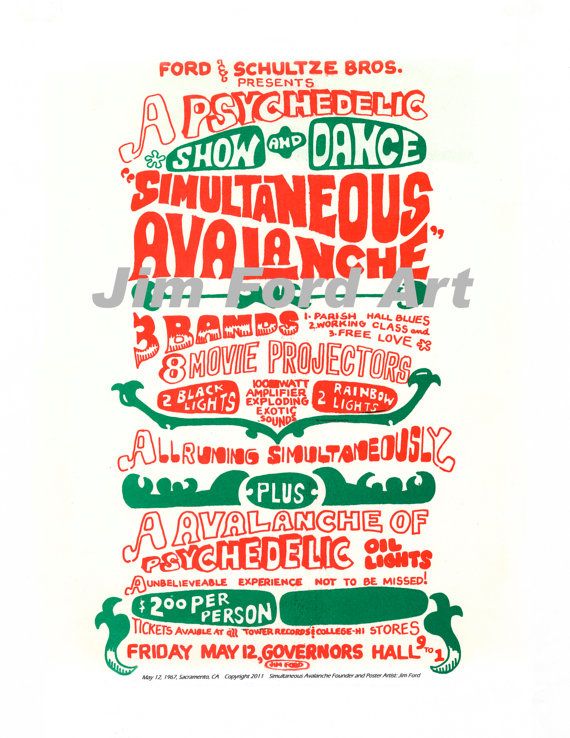
December 28, 1966 Governors Hall, Sacramento, CA: Grateful Dead/Quicksilver Messenger Service/local band (Wednesday)
In 1966, Sacramento's biggest potential rock venue was the 3,687 seat Civic Auditorium, and Fillmore bands, much less the Grateful Dead, were not yet in a position to headline such a large venue. The Grateful Dead's initial gig in Sacramento was at Governor's Hall in the California State Fairgrounds. California had held a State Fair as early as 1854, and the Fair and the Fairgrounds were an important showcase for state products. What was a better California product than the Grateful Dead, particularly for export to other states? In the Winter there was very little agricultural activity at the Fairgrounds, for obvious reasons, so it makes sense that exhibition halls would be open for an outside concert promotion.
 |
| The
old California State Fairgrounds were at the corner of Stockton Blvd
and Broadway until 1967. Governors Hall was the ornate building at the
entrance, seen here in the center of the photo. |
Up until 1967, the California State Fairgrounds were at the intersection of Stockton Boulevard and Broadway. After 1967, the State Fair moved to the California Exposition grounds (Cal Expo) on the American River. That land had been purchased in 1948, but development had not begun until 1963. Governors Hall was the most prominent building on the site, right at the entrance, but its hard to find out direct information about capacity or seating arrangements. The Sacramento County Hospital had been right next to the Fairgounds, and in 1968 it would become the Sacramento Medical Center, part of the UC Davis School Of Medicine.
Almost nothing is known about this show except that it occurred.
 |
| A flyer for Big Mama Thornton and the Grateful Dead at Freeborn Hall, UC Davis, presented by the Municipal Union Student Council, January 6, 1967 |
January 6, 1967 Freeborn Hall, UC Davis, Davis, CA: Big Mama Thornton/Grateful Dead (Friday) Municipal Union Student Council Presents
The
Grateful Dead returned to Freeborn Hall a few months after their debut there in September 1966. We don't
have much information about this concert, but it seems to have happened.
This show was just a week after the Sacramento show at the Fairgrounds,
but UC Davis would have just started the term, and so the Davis crowd
would have been different. The Grateful Dead could easily have booked
many successful concerts at UC Davis throughout the '60s and '70s, but
Freeborn was a very busy building, and dates were largely unavailable.
 |
| The Grateful Dead played Stockton on April 28, 1967 |
April 28, 1967 Stockton Ballroom, Stockton, CA: Grateful Dead (Friday) Green Grass Productions Presents
The Grateful Dead's 1967 performance at the Stockton Ballroom was an event sponsored by the Pacific Student Association, the student organization of Stockton's University of The Pacific. The dance was part of an annual week of events celebrating Mardi Gras (yes, in April). The theme of the week was "A Thousand Clowns." Friday night began at 5:30 pm with a barbeque on campus, then at 7:30 the "Mardi Gras Queen" and "Ugly Man" contestants were introduced at the school auditorium. Prizes would also be awarded for a special beard growing contest. The Grateful Dead performance was later that evening.
The University of The Pacific had been founded in 1851 (as California Wesleyan College) in Santa Clara, and was California's first college. It was also the first California college to admit women, which it did when it moved to San Jose in 1871. The school has had a substantial history since then, and after a number of mergers it moved to Stockton in 1925. The school is particularly well regarded for its affiliated professional schools, including McGeorge Law School, which is located in Sacramento (about 50 miles North on Highway 99).
The Stockton Ballroom, as noted, was actually some miles from campus. While it appears that regular people could gain admission to the show, the event was sponsored and produced by the Student Association, so that explains why there was almost no publicity and no review of the concert, as it was more of a dance. The show would likely have been subsidized somewhat by the school, so ticket sales might not have to cover the whole cost. Since it was a school event that started late (after the beard-growing prizes were awarded), there did not seem to be time for or a need for an opening act. The show was produced by Green Grass Productions, the same group of students who had put on the Dead at Stockton Ballroom in June 1966 (above).
.jpg) |
| The Fresno SP Station was built in 1889. This image is from around 1915. The building is on H Street, and will be part of the forthcoming Fresno High Speed Rail station. |
Fresno, CA
Fresno County had been formed in 1856, on the heels of the Gold Rush. Initially, the county seat was called Millerton. Millerton was largely flooded out in 1867. Southern Pacific built a rail stop nearby in 1872, called Fresno Station, bringing the County's crops to the wider world. Many of the remaining Millerton residents relocated to be nearer Fresno Station. The town of Fresno was incorporated in 1885. Millerton was ultimately inundated when the Friant Dam was completed in 1944.
Fresno is California's largest inland city, and its thriving economy has always been tied to large scale agricultural production. Fresno has always been served by US-99, previously US-99E, the "Golden State Highway." Fresno, with a 2020 population of over 500,000, remains the largest American city without a direct link to the Interstate Highway System. I-5, the West Side Freeway, the former US-99W, shot through the middle of the state following 1972, but Fresno remains outside that footprint.
In 1960, the population of Fresno was 133, 929, and in 1970 it had grown to 165,655 (a 27% increase). Plenty of them were teenagers, and they liked rock music, but it wasn't West Hollywood or the Haight-Ashbury.
 |
| May 12 67 |
The Marigold Ballroom was a tiny venue on 1833 E. Hedges, not too far from downtown. The Friday night booking was advertised as having an early and late show, but apparently the Grateful Dead only played the late show. The show was reviewed in the Fresno Bee. Reviewer David Hale gave a fairly positive, accurate review for a 1967 Daily paper. The implication of the review was that the event was fairly crowded. Places like Fresno didn't have any underground scene, so the locals were often game for any exciting group from out of town even if they hadn't heard them.
Opening act The Road Runners featured guitarist Bruce Conte, who would move to the Bay Area in a few years and join the Loading Zone and then Tower Of Power for much of the 1970s.

February 16, 1968 Stanislaus County Fairgrounds, Turlock, CA: Grateful Dead/Big Brother and The Holding Company. Crystal Syphon (Friday)
The Grateful Dead actually played Turlock. It was part of the touring that was used for Anthem Of The Sun, but it was not recorded (updated 20260418, thanks LIA). Turlock was 15 miles Southeast of Modesto, and was a farming center. US-99 went through downtown. The population was only 9,116 in 1960 (rising to 13,992 by 1970). Cal State Stanislaus opened in 1960, helping the growth of the city (the population is now over 70,000).
Crystal Syphon was a locally popular Merced area band. According to an interview with the band, Big Brother was on the bill as well. Guitarist Jeff Sanders had some amusing memories:
We were politely reaming the Grateful Dead's roadie for setting all of their equipment in front of ours while we were out for some food. We had to play first, so our equipment needed to be in front. The very nice, apologetic and helpful roadie was busting his butt to move all of their drums and equipment all by himself when we realized that the guy wasn't a roadie, he was Jerry Garcia. We knew him only from the pictures on their first LP, where he was clean-shaven. He had since grown a beard and had his hair tied back. That was an incredible gig in many ways, because in a fairgrounds building in a town of less than fifteen thousand people, we played on a bill with the Grateful Dead and with Big Brother featuring Janis Joplin, both bands at their peak with those particular players, and probably the audience members got in for three dollars or less.
 |
| February 17, 1968 |
The Grateful Dead would return to Fresno in early 1968. This time they were playing the 6,852-capacity Selland Arena, second on the bill to Country Joe & The Fish. Selland Arena, named after former Fresno mayor Arthur Selland, was one of four venues at the Fresno Convention Center complex. The Arena had opened on October 11, 1966, and it was home to the Fresno State Bulldogs basketball team, as well as hosting the usual trade shows and other sports events. The Selland Arena is located at 700 M Street, right downtown, and it remains Fresno's premier concert and sports venue to this day (it has been expanded since then).
Country Joe & The Fish had a far higher profile than the Grateful Dead at this point. They had released two albums in 1967 for Vanguard Records, Electric Music For The Mind And Body (May) and Feel-Like-I'm-Fixin'-To-Die (December). The Dead had only released their relatively unpopular debut album. Fresno did not yet have a flagship FM rock radio station at this time. The Dead would mostly only have been known from Fillmore posters, but those circulated widely, so the band's name was known even if their music wasn't. Valley Fever was a local band.
Dan Healy was in the process of recording the Grateful Dead live for Anthem Of The Sun during this period, but the Fresno show was not recorded. Both the show before it (Carousel Ballroom Feb 14 '68) and the ones after it (Kings Beach Bowl, North Lake Tahoe Feb 22-24 '68) have seen archival releases. So we generally know what the Dead sounded like this week, just not this specific night in Fresno.
 |
| Cream and the Grateful Dead played Sacramento Memorial Auditorium on March 11, 1968. Tom Constanten (who sat in with the Dead) recalls that the bands stopped at the Nut Tree in Vacaville on the way home. |
March 11, 1968 Sacramento Memorial Auditorium, Sacramento CA: Cream/Grateful Dead (Monday)
The Grateful Dead returned to Sacramento fifteen months after their initial appearance, opening for the mighty Cream on a Monday night. Cream had made a triumphal return to the Fillmore, so big that most of the nights were moved across the street to the much larger Winterland. Jerry Garcia, like most local musicians, had made a point of seeing Cream (I have written about this at length). Cream was big enough to headline the 3600+ capacity Sacramento Memorial Auditorium, and the Dead wangled their way onto the bill. On the way back from the show, Cream and the Dead stopped at the Nut Tree in Vacaville for a Summit Meeting of sorts.
By this time, the Dead were certainly infamous, at least, and in any case they had released an album. Few fans in Sacramento would have heard them live, however. The Memorial Auditorium was on 1515 J Street (between 15th and 16th St), and had opened in 1927. It was Sacramento's most high profile venue. The Rolling Stones had already played there three times, for example (1964, '65 and '66).
 |
| The October 3, 1968 Sacramento Bee notes that The Turtles would be replacing Traffic at next week's concert at the Sacramento Memorial Auditorium |
The Grateful Dead returned to the Sacramento Memorial Auditorium, sharing the headline with The Turtles. The Turtles had replaced Traffic, who had dropped out at the last second because Dave Mason had abruptly left the group. Now, to be clear, The Turtles were in fact a terrific folk-rock group who surely played a great set, but this show would not have been like a Fillmore show. There were six bands, so everybody would have played short sets. The Dead probably played about an hour. There are numerous other sub-plots to this show, too--Pigpen probably wasn't there, to name one--but I have dealt with those peculiarities elsewhere.
In Fall 1968, Sacramento had a lot of teenagers who loved rock and roll, but it wasn't hip yet. That would come soon, when KZAP-fm (98.5) started broadcasting "free-form" rock on November 8, 1968. Suddenly, young Sacramentans could hear album cuts and long guitar solos instead of pop music, Cream instead of The Archies, and the city got pretty cool pretty quick. The Sound Factory opened, which was Sacramento's version of the Avalon, and lots of cool bands came through town.
But that was still in the future, if the near future. In October, six bands played and per a review, the Sacramento Memorial Auditorium only sold 2,000 tickets or so (of 3,600). The Grateful Dead were still too underground for Highway 99 and the capital of Central California.
| A poster for the Grateful Dead at Chico's Silver Dollar Fairgrounds on November 1, 1968 |
November 1, 1968 Armory Building, Silver Dollar Fairgrounds, Chico, CA: Grateful Dead/Friends/Gunge (Friday)
Both the Grateful Dead and Quicksilver returned to the Silver Dollar Fairgrounds in Fall '68. By this time they were both Fillmore West headliners with albums under their belt. The Dead were booked by Bill Graham's Millard Agency, and during this period the Agency tried to cash in on the infamy of Fillmore bands, famous from the posters, by booking them throughout California. Even so, the Dead rapidly got too big for tiny Chico in any case. Although Chico's population would grow by 32% in 10 years, in 1970 it was still only 19,580. The population probably mostly doesn't include the student population of Chico State, however.
 |
| Jim Parber at work, ca. 1975 |
Merced, CA
Merced is on Highway 99, midway between Modesto and Fresno. It is about 40 miles South of Modesto. Like most cities on US-99, although it was not large, it was a center of commerce for all the farming happening around the region. In 1970, Merced only had a population of 22,670, and the region did not really grow in population until the 1990s. Still, there was a little music scene, as bands from Los Angeles and San Francisco would sometimes slip gigs in at the Fairgrounds or the Legion Hall. The Grateful Dead were said to have played a gig at the Merced Fairgrounds on Thursday, March 27, 1969, but the source of the date was a mis-labeled tape (from Modesto the next night).
Merced still gets an honorable mention, however, in any chronicle of the Grateful Dead and Highway 99. Merced is just a few miles South of Castle Air Force Base. As a result, USAF Colonel Jack Parber's sons were raised in Merced and went to High School there. His son James Parber, himself a fine guitarist, definitely saw the Grateful Dead at Fresno in 1968, and also at the Avalon and the Fillmore. James Parber went on to play professionally in the 70s with Lawrence Hammond and Billy C. Farlow, but he fell ill to a particularly vicious form of cancer in 1979. He died far too young in 1991.
 |
| Jim Parber, Bob Weir's half-brother, was also an aspiring poster artist. Here's his poster for Moby Grape at the Merced Legion Hall on March 15, 1968. |
Colonel Jack Parber turns out to have been Bob Weir's birth father. In 1996, the (by then retired) Colonel and Bob had as happy a reunion as one could wish for. All that was missing was the other guitar player in the family. I wrote about this at some length. Pour one out or light one up for Jim Parber, as you see fit.
 |
| The Modesto Arch. It says "Modesto: Water, Wealth, Contentment, Health" |
Modesto, CA
Modesto, CA, 30 miles South of Stockton, and 80 miles South of Sacramento, was founded in 1870 as a stop on the Southern Pacific Railroad. While the city has been a center of agricultural production since its inception, it did not have a large population in the 1960. The 1960 census put the population at 36,585, and while the city grew substantially in the next decade, it was still just 61,712 in the 1970 census.
March 28, 1969 Modesto Junior College, Modesto, CA: Grateful Dead (Friday)
Modesto and the surrounding farm communities had teenagers, so rock bands would play there in the 1960s. Bands would play shows up and down Highway 99, sponsored by local radio stations. Although some cool bands played there (such as Them or the Sir Douglas Quintet), these were all bands with hits on AM Top 40 stations. There wasn't an "underground" Fillmore type scene, nor would there have been enough hipsters to support that.
Modesto Junior College had opened in 1921, very early for a California Junior College (most were opened in the late 1950s and early 60s). The College is located at 435 College Avenue in Modesto. The Student Center, on the East Campus, still seems to be intact, and I assume there was (and may still be) a ballroom type facility.
 |
| A promotional photo in the (Thursday) May 1, 1969 Placer Herald for the Grateful Dead at the May 3 Sierra Pop Festival at Sierra College in Rocklin, CA, 25 miles North of Sacramento on US-80. The caption helpfully notes that "The Grateful Dead, above, reputed to be one of the oldest and best groups of the San Francsico rock scene, will be featured at the Sierra Pop Festival." |
May 3, 1969 Football Field, Sierra College, Rocklin, CA: Grateful Dead/Youngbloods/Empathy/Stillborn/Abe Harris Bluz Band/Bronze Locomotive (Saturday) Sierra College Pop Festival Noon-8
Sierra College was a junior college in Rocklin, about 25 miles Northeast of Sacramento on US-80. It wasn't on Highway 99, but it was near enough that the concert was designed to draw fans from Sacramento and the Central Valley. Initially, the show was advertised as a two-day festival (May 3 and 4), with numerous Mercury Records acts, like the Sir Douglas Quintet, Harvey Mandel and The McCoys ("Hang On Sloopy") supporting the Dead and the Youngbloods. In the end, it was a one-day concert, with an 8-hour show on the football field, and then a night-time dance in the modest school gym. The Dead and the Youngbloods were supported by some pretty obscure local bands (only teenagers would name a band "Stillborn").
We have a tape of the Dead set (of course), so we know they only played an hour. We also know that they had to have played early in the afternoon, since we know that the Dead were co-headlining Winterland with Jefferson Airplane that evening. The Grateful Dead were a big deal in San Francisco, sharing the bill with SF's biggest headliner at the 5400-capacity converted ice rink. But the pop festival in Sacramento with all sorts of groovy bands had shrunk down to a single day and some local bands, a clear sign of an event that didn't sell many tickets.
 |
| June 13, 1969 |
The Grateful Dead returned to Fresno as headliners. At this time, the Dead were booked by the Millard Agency, Bill Graham's outfit, as were opening acts AUM and Sanpaku. The shared booking explains why AUM and Sanpaku opened for so many Dead shows during this year. At this show, AUM guitarist Wayne Ceballos sat in for "Schoolgirl" and "Lovelight," and AUM's Gary Larkey played flute on "Lovelight" as well. There were similar jams the next night at Monterey.
The poster lists the venue as Convention Center Arena, rather than Selland Arena. According to Gordon Young's enthusiastic review in the next day's Bee, they did play Selland. Selland is part of the Convention Center, but it's odd that the poster didn't identify Selland.

California had moved the State Fairgrounds 6 miles from Stockton & Broadway to the land they had purchased 20 years earlier, Northeast of downtown and across the American River. The new site was named Cal Expo. The new state fair was first held at Cal Expo in 1968, while the facilities at the old fairground were shut down over the next few years. The address for all events at Cal Expo is 1600 Exposition Boulevard, but that is just the standard Fair address. Building A is near the Center of the fair, between the Main Gate and "The Farm."
Building A and Building B were large pavilions for trade shows and the like, a pair of rooms with shared concessions and services. They probably weren't good performance rooms, but 1969 rock concerts were considered more like a cattle show than an artistic performance, so it's no surprise that there were a number of rock concerts in Building A. I don't know what the capacity would have been (you can look for yourself at the facility and try and decide).
KZAP, Sacramento's "underground" rock station, seemed to be having an anniversary party. The show was long for a state fair event, a full six hours from 7pm to 1am. Still, there were five bands. While we recognize some of the names today, all but the Dead were just local acts. Country Weather was from Contra Costa County, and had opened at the Fillmore West. A.B. Skhy had arrived from Wisconsin in 1968 (as The New Blues) and had added Howard Wales on organ. By the end of '69, they had released an album on MGM. Commander Cody, also new in town, had only started gigging in Berkeley a few months earlier, and were still pretty obscure. Wildwood is unknown to me. The Dead did play two sets. I don't know about attendance. The Dead did not return to the Fairgrounds for 15 years, but there weren't any significant rock concerts there anyway.
 |
| An I-5S mileage sign in Woodland, CA (Sacramento 10, Los Angeles 391) |
Central Valley Status Report: End of 1969
US-99W would be replaced by Interstate-5 in three phases, linking the existing Southern and Northern legs of the freeway. The first phase, from the San Joaquin County Line (west of Modesto) to Los Banos, had been completed by 1967. The second phase extended southwards to Wheeler Ridge (essentially The Grapevine, if you know California), connecting I-5 to US-99E, and on down to Southern California, all the way to Dodger Stadium and then San Diego. The third phase, in the North, was completed in 1979. Thus Interstate-5 had replaced US-99W all the way to Sacramento, completing the link to the Northern section. I-5 went from Seattle to San Diego, replacing US-99 as the main North-South artery.
US-99E remained intact, and still does today, but for various reasons the road was re-named. US-99E, from Bakersfield to Fresno and Stockton, and on to Sacramento and then Chico, is now known as CA-99 (or SR99 in some maps), but it is still "Highway 99" even if the world around it has changed. The population of all the cities and towns of CA99 has absolutely boomed in the last 40 years, a huge driver of California's population growth.
In the 1970s, Bill Graham Presents and some Southern California promoters such as Pacific Presentations made efforts to develop the Central Valley into a market for live rock concerts. It largely worked. When I got to UC Berkeley in 1975, my friends in the dorm from Fresno (hi Allan, hi Jeff) explained that they had seen every band that played LA or SF, but on a Wednesday night. They were exaggerating, but not by much. The Grateful Dead made some efforts to participate in expanding the rock concert market into the Central Valley, but for the most part it didn't work for the band. Touring in the Northeast and Southeast was simply too lucrative, and the band couldn't devote the time required for the much smaller Central Valley. I will look at the Grateful Dead and the Central Valley in a subsequent post.
Ultimately, the California State Fairgrounds opened the 14,000 capacity Cal Expo Amphitheater in 1984. From 1984 through 1994, the Grateful Dead would play 25 shows at Cal Expo (plus one more by the Jerry Garcia Band). The entire Central Valley, as well as the East Bay and Northern California in general, could make it to Sacramento, as it was designed as the center of the state by the railroads, and thus the entire freeway system conformed to that original geography.
Next Post:
The Grateful Dead in The Outer Boroughs 1969-75
Previous Post:
October 1, 1967 Greek Theatre, UC Berkeley, Berkeley, CA: Charles Lloyd/Grateful Dead/Bola Sete