The Grateful Dead's participation in the cross-Canadian train trip known as Festival Express is well known from the movie of the same name and the song "Might As Well" which memorialized the party.
However, I came across this newspaper ad for the Winnipeg show from the June 29, 1970 edition of the Winnipeg Free Press (which was the local daily, not an underground weekly). I know of no other poster or ad for the show, so I thought I would post it for those interested in completeness.
Some notes on the Canadian groups (other than The Band, of course):
Mashmakhan was a popular Toronto band who had a well-known song called As The Years Go By off their Columbia debut album. Apparently there is footage of Mashmakhan performing in the Festival Express movie.
James And The Good Brothers later moved to the Bay Area, and Jerry Garcia and Jack Casady performed with them at Fillmore West in February 1971.
Charlebois refers to Quebec singer, author, actor and brewery owner Robert Charlebois.
Ian and Sylvia Tyson were a Canadian folk duo who had started playing country rock music around 1968. Their pedal steel guitar player was Buddy Cage, who met Jerry Garcia and The New Riders of The Purple Sage on the train, and subsequently joined the Riders. Cage, Garcia and others join Ian and Sylvia and others for a closing night jam from the Calgary show in the movie.
Note that the New Riders Of The Purple Sage are not mentioned in the ad. At the time, they had no album, and had only performed live with the Dead, mostly on the East and West Coast.
Identifying and illuminating live Grateful Dead shows (and shows by band members) that are unknown or poorly documented.
Friday, November 20, 2009
Wednesday, November 18, 2009
July 29-30, 1977: Theatre 1839, 1839 Geary Blvd, San Francisco, CA Jerry Garcia Band
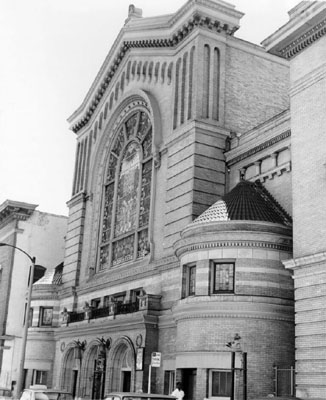
Most scholarly Deadheads are aware that the Jerry Garcia Band played two shows at Theatre 1839 in San Francisco on July 29 and 30, 1977, not least because a fine double-cd set was released from those shows. I attended the second show on July 30, and it was a truly wonderful performance in an inspiring venue. I was sorry that Jerry never played there again(update--except that, of course, he did--whoops. Reconstruction played there on August 10, 1979). It was only later when I found out some of the interesting historical aspects of the building, and I thought I would pass those on.
There were three significant buildings on the South (odd numbered) 1800 block of Geary Boulevard. The most famous to rock fans is of course the Fillmore Auditorium at 1805 Geary, on the corner of Fillmore and Geary, built in 1912 (as The Majestic Hall and Dancing Academy) and still operating today. Next door was the former site of the synagogue for Temple Beth Israel, an early Jewish congregation in San Francisco, founded around 1860, which began constructing its fifth building at 1839 Geary in 1905, although its completion was interrupted by the April 1906 earthquake . Next to the synagogue was the Scottish Rites (Masonic) Temple Building, known as the Alfred Pike Memorial Temple, at 1859 Geary, which dated back to the 19th century. A remarkable photo exists from right after the 1906 San Francisco earthquake, showing a damaged Beth Israel synagogue and the equally damaged Masonic Temple, with an empty lot where the future Fillmore would be built a few years later. Although there were a number of different addresses on the block, these three buildings were the main structures on the block until the 1980s.
I have written an extensive post about The Geary Temple (1859 Geary) elsewhere, but 1839 Geary deserves some attention of its own. A striking photograph from 1964 of Temple Beth Israel can be seen at the San Francisco Public Library site. The edge of the Fillmore Auditorium is visible just to the left (East) of the building. It is a striking and beautiful building, which in 1964 would have been 58 years old (it was completed in 1906, after the earthquake). In 1964 the Fillmore Auditorium, after some time as a roller skating rink, had become an important venue for African-American music, promoted by Charles Sullivan, who was one of the principal promoters of black music on the West Coast.
When Charles Sullivan retired at the end of 1965, Bill Graham took over the lease of the Fillmore Auditorium, starting on February 1, 1966, after having rented the facility a few times. The venue was an immediate success, but Graham was not without troubles. In particular, he had particular difficulty with the status of his "Dance Hall Permit," a left over bit of bureaucracy from the post-Prohibition era. While initially Graham had used Sullivan's license, he had considerable trouble procuring a license from the City of San Francisco, and at one point was even arrested. This made Graham particularly susceptible to challenges from the community.
Apparently the rabbi at Temple Beth Israel was not a fan of Graham's use of the Fillmore (whether he appreciated Sullivan's promotions is unknown). Graham took a bitter relish in relaying the story of how the rabbi accused him of not knowing the suffering of the Jews, in response to which Graham pulled up his sleeve and showed the rabbi the number the Nazis had tattooed on his arm as a child (I heard Graham tell this story in person at a lecture in 1976, and he was still angry at the rabbi). Twice in 1966, Graham moved events at the Fillmore to other venues to accommodate Jewish religious celebrations: on April 16, 1966 the Jefferson Airplane/Butterfield Blues Band show was moved from the Fillmore to Harmon Gym at UC Berkeley, and on September 10, 1966 the Mothers Of Invention/Oxford Circle show was moved to the Scottish Rites Temple across town (at 2850 19th Avenue and Sloat Blvd).
Graham eventually received a Dance Hall Permit, and apparently by 1967 conflicts with the neighboring Synagogue were no longer an issue. Whether Graham was no longer concerned with political pressure, whether he moved key dates to Winterland or there was some other solution is not clear to me (I have not been able to determine which would have been the relevant dates in 1967). In any case, Graham was so successful he looked to move out of the Fillmore to the Fillmore West, and by mid-summer 1968 Graham had moved to Market and Van Ness.
Temple Beth Israel was on the move as well, as its Congregation merged with another Congregation, becoming Congregation Beth Israel-Judea in 1969. The Congregation moved to 625 Brotherhood Way in San Francisco, where it remains today. The Temple at 1839 Geary seems to have been temporarily used for other functions and then sold around 1971, as near as I can tell. The building's history from 1971 to 1977 is obscure to me.
Theatre 1839
Ads for the shows above abruptly appeared in 1977. The promoters were unknown to me. Older folks must have recognized the building, but all I knew at the time was that it was near Winterland (at Post and Steiner), then the principal rock and roll concert venue in the Bay Area. I knew the Fillmore Auditorium had been somewhere around there, but when we went to see Jerry Garcia (hi Geoff) at Theatre 1839, we had no idea that the fully intact Fillmore was right next door. Although the venue had "festival seating" for the most part, probably different than its synagogue functions, the elegant ceilings and decorations were intact, and it was not only a beautiful building but beautiful sounding as well.
The Garcia Band show on July 30, 1977 was fantastic, and when I later acquired tapes of that night and the night before I learned that I had not imagined it. The Hot Tuna show on August 5 was used for the 1978 Hot Tuna live album Double Dose, so all the shows at Theatre 1839 were turned into live albums. I talked to someone who went to the Hot Tuna show, and he confirmed my feeling that it was a wonderful venue.Whatever the finances behind the Theatre, however, it was not used for another show in that incarnation, and more's the pity for that.
Right next door, however, was the converted Alfred Pike Memorial Scottish Rites Temple, which by this time was the headquarters of Jim Jones's infamous Peoples Temple. Jones and his followers left for Jonestown, Guyana and their tragic mass suicide took place on November 18, 1978. While Theatre 1839 was not directly connected to those events, it did add to the strange mojo of the block.
Temple Beautiful
Theatre 1839 did arise as a performance venue, however, known as Temple Beautiful in early 1979 and hosting a number of punk rock shows. The Clash in particular played a warmly remembered gig there, as well as many more local bands. While this is outside the scope of this blog, it is worth noting that once a Use Permit has been defined, venues are more likely to remain in use. Once again, I do not know the finances behind the concerts, nor why the building stopped being used for music after about 1980. At some point the building became "The Duquette Pavilion," hosting the work of artist Anthony Duquette.
The Loma Prieta earthquake of 1989 damaged the Fillmore Auditorium, Temple Beautiful (1839) and the former People's Temple (1859), and all the buildings were damaged by fire. The Fillmore was fully refurbished, but the two other buildings were torn down. After some time as vacant lots, the 1859 Geary address is now a newly constructed Post Office, and I do not know the fate of the lot at 1839.
Cross posted at Rock Archaeology 101
There were three significant buildings on the South (odd numbered) 1800 block of Geary Boulevard. The most famous to rock fans is of course the Fillmore Auditorium at 1805 Geary, on the corner of Fillmore and Geary, built in 1912 (as The Majestic Hall and Dancing Academy) and still operating today. Next door was the former site of the synagogue for Temple Beth Israel, an early Jewish congregation in San Francisco, founded around 1860, which began constructing its fifth building at 1839 Geary in 1905, although its completion was interrupted by the April 1906 earthquake . Next to the synagogue was the Scottish Rites (Masonic) Temple Building, known as the Alfred Pike Memorial Temple, at 1859 Geary, which dated back to the 19th century. A remarkable photo exists from right after the 1906 San Francisco earthquake, showing a damaged Beth Israel synagogue and the equally damaged Masonic Temple, with an empty lot where the future Fillmore would be built a few years later. Although there were a number of different addresses on the block, these three buildings were the main structures on the block until the 1980s.
I have written an extensive post about The Geary Temple (1859 Geary) elsewhere, but 1839 Geary deserves some attention of its own. A striking photograph from 1964 of Temple Beth Israel can be seen at the San Francisco Public Library site. The edge of the Fillmore Auditorium is visible just to the left (East) of the building. It is a striking and beautiful building, which in 1964 would have been 58 years old (it was completed in 1906, after the earthquake). In 1964 the Fillmore Auditorium, after some time as a roller skating rink, had become an important venue for African-American music, promoted by Charles Sullivan, who was one of the principal promoters of black music on the West Coast.
When Charles Sullivan retired at the end of 1965, Bill Graham took over the lease of the Fillmore Auditorium, starting on February 1, 1966, after having rented the facility a few times. The venue was an immediate success, but Graham was not without troubles. In particular, he had particular difficulty with the status of his "Dance Hall Permit," a left over bit of bureaucracy from the post-Prohibition era. While initially Graham had used Sullivan's license, he had considerable trouble procuring a license from the City of San Francisco, and at one point was even arrested. This made Graham particularly susceptible to challenges from the community.
Apparently the rabbi at Temple Beth Israel was not a fan of Graham's use of the Fillmore (whether he appreciated Sullivan's promotions is unknown). Graham took a bitter relish in relaying the story of how the rabbi accused him of not knowing the suffering of the Jews, in response to which Graham pulled up his sleeve and showed the rabbi the number the Nazis had tattooed on his arm as a child (I heard Graham tell this story in person at a lecture in 1976, and he was still angry at the rabbi). Twice in 1966, Graham moved events at the Fillmore to other venues to accommodate Jewish religious celebrations: on April 16, 1966 the Jefferson Airplane/Butterfield Blues Band show was moved from the Fillmore to Harmon Gym at UC Berkeley, and on September 10, 1966 the Mothers Of Invention/Oxford Circle show was moved to the Scottish Rites Temple across town (at 2850 19th Avenue and Sloat Blvd).
Graham eventually received a Dance Hall Permit, and apparently by 1967 conflicts with the neighboring Synagogue were no longer an issue. Whether Graham was no longer concerned with political pressure, whether he moved key dates to Winterland or there was some other solution is not clear to me (I have not been able to determine which would have been the relevant dates in 1967). In any case, Graham was so successful he looked to move out of the Fillmore to the Fillmore West, and by mid-summer 1968 Graham had moved to Market and Van Ness.
Temple Beth Israel was on the move as well, as its Congregation merged with another Congregation, becoming Congregation Beth Israel-Judea in 1969. The Congregation moved to 625 Brotherhood Way in San Francisco, where it remains today. The Temple at 1839 Geary seems to have been temporarily used for other functions and then sold around 1971, as near as I can tell. The building's history from 1971 to 1977 is obscure to me.
Theatre 1839
Ads for the shows above abruptly appeared in 1977. The promoters were unknown to me. Older folks must have recognized the building, but all I knew at the time was that it was near Winterland (at Post and Steiner), then the principal rock and roll concert venue in the Bay Area. I knew the Fillmore Auditorium had been somewhere around there, but when we went to see Jerry Garcia (hi Geoff) at Theatre 1839, we had no idea that the fully intact Fillmore was right next door. Although the venue had "festival seating" for the most part, probably different than its synagogue functions, the elegant ceilings and decorations were intact, and it was not only a beautiful building but beautiful sounding as well.
The Garcia Band show on July 30, 1977 was fantastic, and when I later acquired tapes of that night and the night before I learned that I had not imagined it. The Hot Tuna show on August 5 was used for the 1978 Hot Tuna live album Double Dose, so all the shows at Theatre 1839 were turned into live albums. I talked to someone who went to the Hot Tuna show, and he confirmed my feeling that it was a wonderful venue.Whatever the finances behind the Theatre, however, it was not used for another show in that incarnation, and more's the pity for that.
Right next door, however, was the converted Alfred Pike Memorial Scottish Rites Temple, which by this time was the headquarters of Jim Jones's infamous Peoples Temple. Jones and his followers left for Jonestown, Guyana and their tragic mass suicide took place on November 18, 1978. While Theatre 1839 was not directly connected to those events, it did add to the strange mojo of the block.
Temple Beautiful
Theatre 1839 did arise as a performance venue, however, known as Temple Beautiful in early 1979 and hosting a number of punk rock shows. The Clash in particular played a warmly remembered gig there, as well as many more local bands. While this is outside the scope of this blog, it is worth noting that once a Use Permit has been defined, venues are more likely to remain in use. Once again, I do not know the finances behind the concerts, nor why the building stopped being used for music after about 1980. At some point the building became "The Duquette Pavilion," hosting the work of artist Anthony Duquette.
The Loma Prieta earthquake of 1989 damaged the Fillmore Auditorium, Temple Beautiful (1839) and the former People's Temple (1859), and all the buildings were damaged by fire. The Fillmore was fully refurbished, but the two other buildings were torn down. After some time as vacant lots, the 1859 Geary address is now a newly constructed Post Office, and I do not know the fate of the lot at 1839.
Cross posted at Rock Archaeology 101
December 8-9, 1967: Psychedelic Supermarket, Boston, MA The Grateful Dead
Boston, Massachussets in the late 1960s had a thriving rock scene, which is not surprising for a major Northeastern city with numerous colleges in the city itself and the nearby suburbs. However, while there are various overviews of the Boston scene available on the web, I know of no complete and accurate chronology of rock shows in the Boston area available in print or on the Web. As a result, performances for many groups have fallen under the radar. One such show is the Grateful Dead's Boston debut at the Psychedelic Supermarket on the weekend of December 8 and 9, 1967.
Fortunately for rock prosopographers, the Massachussets Institute of Technology has had almost its entire press run accessible on the web, befitting a school of top-flight engineers. Perusing the 60s editions provides a gold mine of rewards for the diligent historian. One such reward is Steve Grant's review of The Dead at the Pscyhedelic Supermarket in the Tuesday, December 12, 1967 edition of The Tech (Volume 87, issue 52, page 6). Grant says the band "made their Boston debut Friday night," so I have reasonably assumed that the band played there Saturday night as well, as that was typical for bookings at the Supermarket at the time.
Grateful Dead chronologies have included a December 29-30, 1967 show at the Supermarket, but not this show. It is my belief that the Dead played the December 8-9 gig and were re-booked for the end of the month. The Supermarket had very few, if any, posters advertising their shows so it is hard to find out the performance history of the venue except in The Tech. The interesting aspect of the December 8-9 Boston show is that the Dead would have had to have flown East to play Boston, flown back West for the show in Los Angeles at The Shrine on Wednesday, December 13, and then returned East for shows from December 22 through December 30. Leaving aside the question of whether they flew back home at all in December, at the very least it suggests that there may be additional undiscovered Grateful Dead performance dates on the East Coast from Mid-November onwards.
It is an apocryphal Dead story (told to me by Dennis McNally among others) that the Dead played Boston on December 30 and flew home to San Francisco the next day, expecting to jam with Quicksilver at Winterland on New Year's Eve. However, a potent batch of brownies--no doubt filled with chocolatey goodness--caused many of the exhausted band members to fall asleep and miss the jam. Regardless of whether you believe the brownie story, it does confirm that the Dead were on the East Coast so I am inclined to believe they played Psychedelic Supermarket two weekends of December 1967.
The Psychedelic Supermarket 590 Commonwealth Avenue, Boston, MA
The Psychedelic Supermarket was actually in an alley behind Commonwealth Avenue, near Kenmore Square and backing onto Boston University, but the street address made it easier to find. It was a converted parking garage, with acoustic qualities to match, and it was not remembered fondly by bands or patrons. Supermarket Promoter George Popadopolis had run a Cambridge coffee house called The Unicorn since the 1950s, and by the mid-60s he was booking electric blues bands as well as folk music. Boston's first and most famous psychedelic venue was the Boston Tea Party (at 53 Berkeley Street) and the second was The Crosstown Bus at 337 Washington Street in suburban Brighton. The Crosstown Bus ran afoul of its creditors, however (the J. Geils Blues Band managed to get their equipment out just before the place was padlocked), just as the hottest band in the country had a booking there.
The Psychedelic Supermarket appears to have debuted with Cream from September 8-16, 1967. The Supermarket does not appear to have had much in the way of collectable or interesting handbills or posters, so the shows are somewhat lost to history. Nonetheless, it appears that George Popadopolis seems to have hastily created this venue to facilitate Cream, in order (apparently) to cash in on the dates dropped by the hastily closed Crosstown Bus. The band’s memory of the club is that it was not ready. It seems possible that a plan by Popadopolis to create a club was abruptly accelerated to cash in on the availability of Cream.
The complete story of The Psychedelic Supermarket (and Boston Tea Party, The Ark and the rest of the venues) is too extensive to go into here, but suffice to say the Supermarket remained open throughout 1968. Many fine bands played there, although none of them seem to remember it fondly. After their return booking in 1967, the Dead played other venues in Boston, which should tell us something. By 1969, the venue was renamed The Unicorn, although that too did not last. Ultimately it became a movie theater, initially called The Nickelodeon, and finally the building was torn down to provide a new science building for Boston University.
Fortunately for rock prosopographers, the Massachussets Institute of Technology has had almost its entire press run accessible on the web, befitting a school of top-flight engineers. Perusing the 60s editions provides a gold mine of rewards for the diligent historian. One such reward is Steve Grant's review of The Dead at the Pscyhedelic Supermarket in the Tuesday, December 12, 1967 edition of The Tech (Volume 87, issue 52, page 6). Grant says the band "made their Boston debut Friday night," so I have reasonably assumed that the band played there Saturday night as well, as that was typical for bookings at the Supermarket at the time.
Grateful Dead chronologies have included a December 29-30, 1967 show at the Supermarket, but not this show. It is my belief that the Dead played the December 8-9 gig and were re-booked for the end of the month. The Supermarket had very few, if any, posters advertising their shows so it is hard to find out the performance history of the venue except in The Tech. The interesting aspect of the December 8-9 Boston show is that the Dead would have had to have flown East to play Boston, flown back West for the show in Los Angeles at The Shrine on Wednesday, December 13, and then returned East for shows from December 22 through December 30. Leaving aside the question of whether they flew back home at all in December, at the very least it suggests that there may be additional undiscovered Grateful Dead performance dates on the East Coast from Mid-November onwards.
It is an apocryphal Dead story (told to me by Dennis McNally among others) that the Dead played Boston on December 30 and flew home to San Francisco the next day, expecting to jam with Quicksilver at Winterland on New Year's Eve. However, a potent batch of brownies--no doubt filled with chocolatey goodness--caused many of the exhausted band members to fall asleep and miss the jam. Regardless of whether you believe the brownie story, it does confirm that the Dead were on the East Coast so I am inclined to believe they played Psychedelic Supermarket two weekends of December 1967.
The Psychedelic Supermarket 590 Commonwealth Avenue, Boston, MA
The Psychedelic Supermarket was actually in an alley behind Commonwealth Avenue, near Kenmore Square and backing onto Boston University, but the street address made it easier to find. It was a converted parking garage, with acoustic qualities to match, and it was not remembered fondly by bands or patrons. Supermarket Promoter George Popadopolis had run a Cambridge coffee house called The Unicorn since the 1950s, and by the mid-60s he was booking electric blues bands as well as folk music. Boston's first and most famous psychedelic venue was the Boston Tea Party (at 53 Berkeley Street) and the second was The Crosstown Bus at 337 Washington Street in suburban Brighton. The Crosstown Bus ran afoul of its creditors, however (the J. Geils Blues Band managed to get their equipment out just before the place was padlocked), just as the hottest band in the country had a booking there.
The Psychedelic Supermarket appears to have debuted with Cream from September 8-16, 1967. The Supermarket does not appear to have had much in the way of collectable or interesting handbills or posters, so the shows are somewhat lost to history. Nonetheless, it appears that George Popadopolis seems to have hastily created this venue to facilitate Cream, in order (apparently) to cash in on the dates dropped by the hastily closed Crosstown Bus. The band’s memory of the club is that it was not ready. It seems possible that a plan by Popadopolis to create a club was abruptly accelerated to cash in on the availability of Cream.
The complete story of The Psychedelic Supermarket (and Boston Tea Party, The Ark and the rest of the venues) is too extensive to go into here, but suffice to say the Supermarket remained open throughout 1968. Many fine bands played there, although none of them seem to remember it fondly. After their return booking in 1967, the Dead played other venues in Boston, which should tell us something. By 1969, the venue was renamed The Unicorn, although that too did not last. Ultimately it became a movie theater, initially called The Nickelodeon, and finally the building was torn down to provide a new science building for Boston University.
Thursday, November 12, 2009
May 30, 1967 Winterland, San Francisco HALO Concert--Who Played?
One of the foundations of rock prosopography has been looking at famous old posters to determine which bands played at which events. One famous poster (above) is for this concert
May 30, 1967 Winterland, San Francisco
Benefit for Haight Ashbury Legal Organization (HALO)
Jefferson Airplane/Big Brother and The Holding Company/Quicksilver Messenger Service/The Charlatans/The Grateful Dead plus Head Lights (Light Show)
By May 1967, the underground bands of the year before were rising stars. The Jefferson Airplane's second album (Surrealistic Pillow) was a hit, The Grateful Dead had released their debut on Warner Brothers, and Big Brother had released some singles and recorded enough for an album, although it would not be released until somewhat later. Quicksilver Messenger Service were popular Fillmore headliners who had hitherto refused to sign a record contract. Only The Charlatans, in some ways responsible for founding the scene, had not found new success. The HALO concert (as its now known) was an increasingly rare event where all the bands who regularly headlined at the Fillmore and Avalon shared a bill together, just as they might have done the previous year. Winterland (capacity 5,400) was far larger than the Fillmore, and probably all the star power was needed to sell that many tickets. It was the Tuesday after Memorial Day, so bands did not have competing gigs.
The chronologies of all four of the major bands list the HALO concert on the basis of the poster. The only problem with that analysis is that we can only be certain Quicksilver Messenger Service actually played, and I am fairly certain that one or two of the bands didn't play at all. I am unable to determine which ones those might be, however, so I will speculate on the evidence here. Although it is impossible to say for certain, there are plausible reasons to think that the Grateful Dead were the ones who did not play the show.I am not aware of a review or eyewitness account of the show that positively confirms which bands played.
The Quicksilver Messenger Service set was broadcast on San Francisco's (and the world's) first underground rock station, KMPX-fm, probably on a tape-delayed basis. This may be the first live FM broadcast of a rock concert, an interesting subject in its own right, but not my focus here. As a result of the broadcast, we are fortunate to have a pretty good quality circulating tape (for 1967) of Quicksilver's opening set. KMPX founder Tom Donahue introduces the band by saying "We're going to do it in six sets tonight, all three bands will play twice." He also cryptically refers to a "mystery guest, imported from a far-off land." Donahue's introduction begs the question--who didn't play?
Quicksilver seems to be opening the show, and the entirety of Donahue's remarks seem to be preserved. Its always possible that another MC explained the running order prior to the set, and Donahue is just speaking of specific groups, but he does say "all three bands will be playing twice," not "these three bands" or some phrase that suggests there are other groups. At the time, it was expected at the Fillmore and Avalon that ever act would rotate through twice: the opening band played 1st and 4th, the headliner 3rd and 6th, and so on, so Donahue's remark would have been understood in that context.
We know Quicksilver played, so let's consider the likelihood of the other groups failing to make the show.
The Charlatans
The Charlatans were the least popular of the groups at this show, by a wide margin, so if they were no-shows that would have had the least impact on attendance. Anyone who wanted to see the Charlatans would still be happy to see the rest of the bands, so they could be dropped without fanfare. On the other hand, the perpetually struggling Charlatans needed the gig the most, and were most likely to be free on a Tuesday night, so they are also less likely than the other groups to have had conflicts.
It was not unheard of at the Fillmore to have an "opening act," usually one not on the poster, that would play an a set prior to the tripartite rotation of the headliners (this would mean that the final act would appear both 4th and 7th). Its plausible that the Charlatans played an opening set and did not repeat, so Donahue's reference to "all three bands" implicitly excluded the Charlatans. I think this is the most likely explanation: the Charlatans played a set, and an announcer explained that someone wasn't playing, so that when Tom Donahue said "all three bands" it was understood who that was. It remains to be discussed who that might have been.
Jefferson Airplane
The Airplane had actually been on tour. They had just spent the weekend in the Pacific Northwest, headlining at the Seattle Center Arena on Monday, May 29 (Memorial Day). The Airplane would have had to fly in with their gear to go to Winterland, and might have been delayed. On the other hand, its a short flight from Seattle, and the Airplane were experienced at touring by this time. Its important also to remember that the Airplane were real rock stars at this point, with hit singles, and a considerably bigger draw than any of the other groups. If the Airplane were not playing, it would have had a considerable effect on ticket sale. Given the relative size of Winterland, the finances of the show probably depended a lot on walk-up sales, so a sudden Airplane cancellation would have had the most significant effect on the gate.
There is apparently a circulating Airplane tape dated "May 29, 1967 Winterland," which I have not heard. I have no way of knowing whether this is mislabeled by location (on May 29 the Airplane were in Seattle) or date. We do know that part or all of the show was taped, because of the Quicksilver tape, so its plausible that its a misdated tape of the Airplane HALO set.
Big Brother and The Holding Company
Big Brother were in town and had no other conflicts. This doesn't rule out the possibility of someone getting sick or other problems, but there was no inherent conflict. No tape circulates that I know about.
The Grateful Dead
The Grateful Dead had not played live (per Deadlists) since Saturday, May 20. However, the Dead were about to embark on their first Eastern tour. They not only began a run at Greenwich Village's Cafe Au-Go-Go on June 1 (through June 10), but they apparently introduced themselves to New York by playing for free in Tompkins Square Park in the East Village (on E. 9th St and Avenue A) on June 1 as well. Thus while the Dead had agreed to play a benefit on a Tuesday night, they were playing live in New York City just 36 hours later.
Bands traveled with considerably less equipment in the 1960s than they do now, and the Dead certainly could have flown to New York on Wednesday (May 31) in order to play Thursday. However, unlike Big Brother and The Airplane, the Dead were gearing up to leave, and that increases the likelihood that some member or piece of equipment was not available for the Winterland show. Although the Dead were a popular local group, they were not nearly as popular as the Airplane, and arguably not as popular as Big Brother or Quicksilver either, so their unexpected absence from the bill would not have been as significant to the walk-up sales.
The Grateful Dead had the closest relationship to the actual Haight Ashbury Legal Organization (see below), but as a result they had also done the most for the organization, so they could beg off and make it up later if they needed to.
Paradoxically, the other plausible argument for the Dead not playing the HALO Benefit is the absence of a tape. We know there was taping equipment there, because of the Quicksilver broadcast. There at least appears to be a circulating Airplane tape. There is no Big Brother tape, but while a few Big Brother tapes circulate, neither the band nor their management made a concerted effort to accumulate and store live tapes (more's the pity). The Dead, on the other hand, were archivists from the beginning. If there was recording equipment, the Dead would have used it and would have preserved the tape. Its possible, of course, that the Dead have been squirreling one away all these years, but I doubt it. While not all stored Dead tapes have been heard publicly, most of the old ones are at least documented.
Conclusions
Five bands were booked at the HALO Benefit, but a surviving Quicksilver tape has Tom Donahue saying "all three bands will play twice." Best guess scenarios:
While the performance of any band at the HALO Benefit other than Quicksilver has to be treated as "unconfirmed," I feel that existing evidence points towards the Grateful Dead as the most likely of the no-shows. Anyone with other evidence or theories should post them in Commentsor email me.
Appendix 1: "Mystery Guest, imported from a Far Off Land"
At the beginning of the Quicksilver tape, Donahue says "all three bands will play twice...and we also have a mystery guest, imported from a far-off land." Since we have no eyewitnesses or reviews (to my knowledge), its impossible to know who this might have been. I will say that being familiar with Tom Donahue's laconic humor from KSAN-fm, the "far off land" was most likely Los Angeles. Assuming that the mystery guest was a musician, as Donahue's introduction implies, and not an actor or public figure, this suggests a brief acoustic set by someone. This hypothesis makes sense particularly if we assume one of the headliners didn't play, as the Mystery Guest would have been a "makeup."
You can speculate for yourself on the mystery guest. Just to pick a name out of thin air, I will note that the Airplane were playing in Seattle with The Byrds, and David Crosby was friends with all the bands, and he would have been an enthusiastic supporter of HALO, but of course its impossible to say without new information.
Appendix 2: The Haight Ashbury Legal Organization
The Haight Ashbury Legal Organization (HALO) was run by two young laywers, Michael Stepanian and Brian Rohan, and their focus was on providing representation for hippies who had been busted for marijuana. Rohan and Stepanian were very effective at throwing out arrests by overzealous cops, and often represented people for free (grateful parents probably paid for the rest). HALO was run out of 715 Ashbury, across the street from the Grateful Dead's house at 710 Ashbury. Don McCoy and other friends of the Dead lived at 715, and its no coincidence that Brian Rohan represented the Grateful Dead (Stepanian ended up representing Hunter Thompson, but that too is another story). With the Summer of Love coming on strong, HALO correctly expected that many naive out-of-towners were at risk for being rousted by the cops, so the San Francisco groups banded together for a benefit to fund HALO for the Summer.
Cross-posted at Rock Prosopography 101
May 30, 1967 Winterland, San Francisco
Benefit for Haight Ashbury Legal Organization (HALO)
Jefferson Airplane/Big Brother and The Holding Company/Quicksilver Messenger Service/The Charlatans/The Grateful Dead plus Head Lights (Light Show)
By May 1967, the underground bands of the year before were rising stars. The Jefferson Airplane's second album (Surrealistic Pillow) was a hit, The Grateful Dead had released their debut on Warner Brothers, and Big Brother had released some singles and recorded enough for an album, although it would not be released until somewhat later. Quicksilver Messenger Service were popular Fillmore headliners who had hitherto refused to sign a record contract. Only The Charlatans, in some ways responsible for founding the scene, had not found new success. The HALO concert (as its now known) was an increasingly rare event where all the bands who regularly headlined at the Fillmore and Avalon shared a bill together, just as they might have done the previous year. Winterland (capacity 5,400) was far larger than the Fillmore, and probably all the star power was needed to sell that many tickets. It was the Tuesday after Memorial Day, so bands did not have competing gigs.
The chronologies of all four of the major bands list the HALO concert on the basis of the poster. The only problem with that analysis is that we can only be certain Quicksilver Messenger Service actually played, and I am fairly certain that one or two of the bands didn't play at all. I am unable to determine which ones those might be, however, so I will speculate on the evidence here. Although it is impossible to say for certain, there are plausible reasons to think that the Grateful Dead were the ones who did not play the show.I am not aware of a review or eyewitness account of the show that positively confirms which bands played.
The Quicksilver Messenger Service set was broadcast on San Francisco's (and the world's) first underground rock station, KMPX-fm, probably on a tape-delayed basis. This may be the first live FM broadcast of a rock concert, an interesting subject in its own right, but not my focus here. As a result of the broadcast, we are fortunate to have a pretty good quality circulating tape (for 1967) of Quicksilver's opening set. KMPX founder Tom Donahue introduces the band by saying "We're going to do it in six sets tonight, all three bands will play twice." He also cryptically refers to a "mystery guest, imported from a far-off land." Donahue's introduction begs the question--who didn't play?
Quicksilver seems to be opening the show, and the entirety of Donahue's remarks seem to be preserved. Its always possible that another MC explained the running order prior to the set, and Donahue is just speaking of specific groups, but he does say "all three bands will be playing twice," not "these three bands" or some phrase that suggests there are other groups. At the time, it was expected at the Fillmore and Avalon that ever act would rotate through twice: the opening band played 1st and 4th, the headliner 3rd and 6th, and so on, so Donahue's remark would have been understood in that context.
We know Quicksilver played, so let's consider the likelihood of the other groups failing to make the show.
The Charlatans
The Charlatans were the least popular of the groups at this show, by a wide margin, so if they were no-shows that would have had the least impact on attendance. Anyone who wanted to see the Charlatans would still be happy to see the rest of the bands, so they could be dropped without fanfare. On the other hand, the perpetually struggling Charlatans needed the gig the most, and were most likely to be free on a Tuesday night, so they are also less likely than the other groups to have had conflicts.
It was not unheard of at the Fillmore to have an "opening act," usually one not on the poster, that would play an a set prior to the tripartite rotation of the headliners (this would mean that the final act would appear both 4th and 7th). Its plausible that the Charlatans played an opening set and did not repeat, so Donahue's reference to "all three bands" implicitly excluded the Charlatans. I think this is the most likely explanation: the Charlatans played a set, and an announcer explained that someone wasn't playing, so that when Tom Donahue said "all three bands" it was understood who that was. It remains to be discussed who that might have been.
Jefferson Airplane
The Airplane had actually been on tour. They had just spent the weekend in the Pacific Northwest, headlining at the Seattle Center Arena on Monday, May 29 (Memorial Day). The Airplane would have had to fly in with their gear to go to Winterland, and might have been delayed. On the other hand, its a short flight from Seattle, and the Airplane were experienced at touring by this time. Its important also to remember that the Airplane were real rock stars at this point, with hit singles, and a considerably bigger draw than any of the other groups. If the Airplane were not playing, it would have had a considerable effect on ticket sale. Given the relative size of Winterland, the finances of the show probably depended a lot on walk-up sales, so a sudden Airplane cancellation would have had the most significant effect on the gate.
There is apparently a circulating Airplane tape dated "May 29, 1967 Winterland," which I have not heard. I have no way of knowing whether this is mislabeled by location (on May 29 the Airplane were in Seattle) or date. We do know that part or all of the show was taped, because of the Quicksilver tape, so its plausible that its a misdated tape of the Airplane HALO set.
Big Brother and The Holding Company
Big Brother were in town and had no other conflicts. This doesn't rule out the possibility of someone getting sick or other problems, but there was no inherent conflict. No tape circulates that I know about.
The Grateful Dead
The Grateful Dead had not played live (per Deadlists) since Saturday, May 20. However, the Dead were about to embark on their first Eastern tour. They not only began a run at Greenwich Village's Cafe Au-Go-Go on June 1 (through June 10), but they apparently introduced themselves to New York by playing for free in Tompkins Square Park in the East Village (on E. 9th St and Avenue A) on June 1 as well. Thus while the Dead had agreed to play a benefit on a Tuesday night, they were playing live in New York City just 36 hours later.
Bands traveled with considerably less equipment in the 1960s than they do now, and the Dead certainly could have flown to New York on Wednesday (May 31) in order to play Thursday. However, unlike Big Brother and The Airplane, the Dead were gearing up to leave, and that increases the likelihood that some member or piece of equipment was not available for the Winterland show. Although the Dead were a popular local group, they were not nearly as popular as the Airplane, and arguably not as popular as Big Brother or Quicksilver either, so their unexpected absence from the bill would not have been as significant to the walk-up sales.
The Grateful Dead had the closest relationship to the actual Haight Ashbury Legal Organization (see below), but as a result they had also done the most for the organization, so they could beg off and make it up later if they needed to.
Paradoxically, the other plausible argument for the Dead not playing the HALO Benefit is the absence of a tape. We know there was taping equipment there, because of the Quicksilver broadcast. There at least appears to be a circulating Airplane tape. There is no Big Brother tape, but while a few Big Brother tapes circulate, neither the band nor their management made a concerted effort to accumulate and store live tapes (more's the pity). The Dead, on the other hand, were archivists from the beginning. If there was recording equipment, the Dead would have used it and would have preserved the tape. Its possible, of course, that the Dead have been squirreling one away all these years, but I doubt it. While not all stored Dead tapes have been heard publicly, most of the old ones are at least documented.
Conclusions
Five bands were booked at the HALO Benefit, but a surviving Quicksilver tape has Tom Donahue saying "all three bands will play twice." Best guess scenarios:
- The Charlatans--either didn't play, or weren't part of the "all three bands."
- Jefferson Airplane--returning from San Francisco, but a possible tape endures, and they were the headliners
- Big Brother--no inherent conflicts, but no confirming evidence
- Grateful Dead--about to leave on their first Eastern tour, and no taped evidence, contrary to typical Dead practice
While the performance of any band at the HALO Benefit other than Quicksilver has to be treated as "unconfirmed," I feel that existing evidence points towards the Grateful Dead as the most likely of the no-shows. Anyone with other evidence or theories should post them in Commentsor email me.
Appendix 1: "Mystery Guest, imported from a Far Off Land"
At the beginning of the Quicksilver tape, Donahue says "all three bands will play twice...and we also have a mystery guest, imported from a far-off land." Since we have no eyewitnesses or reviews (to my knowledge), its impossible to know who this might have been. I will say that being familiar with Tom Donahue's laconic humor from KSAN-fm, the "far off land" was most likely Los Angeles. Assuming that the mystery guest was a musician, as Donahue's introduction implies, and not an actor or public figure, this suggests a brief acoustic set by someone. This hypothesis makes sense particularly if we assume one of the headliners didn't play, as the Mystery Guest would have been a "makeup."
You can speculate for yourself on the mystery guest. Just to pick a name out of thin air, I will note that the Airplane were playing in Seattle with The Byrds, and David Crosby was friends with all the bands, and he would have been an enthusiastic supporter of HALO, but of course its impossible to say without new information.
Appendix 2: The Haight Ashbury Legal Organization
The Haight Ashbury Legal Organization (HALO) was run by two young laywers, Michael Stepanian and Brian Rohan, and their focus was on providing representation for hippies who had been busted for marijuana. Rohan and Stepanian were very effective at throwing out arrests by overzealous cops, and often represented people for free (grateful parents probably paid for the rest). HALO was run out of 715 Ashbury, across the street from the Grateful Dead's house at 710 Ashbury. Don McCoy and other friends of the Dead lived at 715, and its no coincidence that Brian Rohan represented the Grateful Dead (Stepanian ended up representing Hunter Thompson, but that too is another story). With the Summer of Love coming on strong, HALO correctly expected that many naive out-of-towners were at risk for being rousted by the cops, so the San Francisco groups banded together for a benefit to fund HALO for the Summer.
Cross-posted at Rock Prosopography 101
Saturday, November 7, 2009
The Matrix, San Francisco February 1969 High Country with Jerry Garcia and David Nelson
The Matrix, at 3138 Fillmore Street in San Francisco, was the original hippie hangout, even before their were hippies. Founded by Marty Balin and his father, the club provided a place to play for the newly-formed Jefferson Airplane on August 13, 1965. Numerous other groups either debuted or made their San Francisco debut there, such as Big Brother and The Holding Company (on January 10, 1966). The Matrix was also a clubhouse and hangout for what few underground pothead musicians were around at the time. As the scene expanded, and the Fillmore and Avalon became major venues, the Matrix became as a hangout as much as a club. Although The Matrix only served beer and pizza, hippies were very much not welcome at many establishments, and in any case it took a while for rock music to become the dominant form of music in San Francisco nightclubs, so the Matrix was the best small place in the City for rock.
Fortunately for rock fans, Matrix co-owner Peter Abrams recorded just about every performance at The Matrix, which is why so many tapes from the club circulate. Due to the expense of reel-to-reel tape, Abrams could not preserve every single performance, but he made an effort to preserve the best ones, and fans of many groups have benefited. Jerry Garcia played the Matrix in many odd incarnations from 1968 to 1971, and many interesting tapes circulate. One of the most interesting tapes that has circulated over the years is dated Wednesday, February 19, 1969. Garcia plays banjo with the East Bay bluegrass group High Country, his only recorded bluegrass performance between 1964 and 1973.
When I initially wrote this post, I focused on the fact that High Country were not scheduled for February 19, 1969 at The Matrix (Jorma Kaukonen and Jack Casady with Weird Herald were booked). It has since been pointed out to me that the Dead definitely played the Fillmore West on February 19, 1969, so the date has to be incorrect. However, this wouldn't be the first time that Matrix tapes represented the correct week but not necessarily the exact date. I think this is a result of the owners selecting the best performances and then taping over the others, with a less-than-ideal result for marked boxes. Since Jerry Garcia was booked for February 24 and 26 (with Phil Lesh and Bill Kreutzmann in "Mickey Hart and The Hartbeats") I have to presume now that High Country was playing an opening set for one of these gigs.
Although Garcia is plainly audible between songs (discussing what numbers to play, and so on), the tape circulated for many years with constantly incorrect performer information. Many people including myself thought that it featured Peter Rowan on vocals and David Grisman or Frank Wakefield on mandolin. In fact, this was just bluegrass naivete: the group performs standards that every bluegrass player would know, and on the Bill Monroe numbers singer Butch Waller evokes Monroe, just as Rowan did. Waller was the mandolinist as well, as Grisman was in a rock band on the East Coast at the time (Earth Opera, with Rowan), and Wakefield would not meet Garcia for several more years.
Eventually someone played the tape for David Nelson, who explained who really was playing. High Country was a bluegrass band that had formed in late 1968 in Berkeley. Leaders Butch Waller (mandolin) and Rich Wilber (bass, guitar) teamed with Rick Shubb (banjo) and his girlfriend Markie Sanders (guitar). Shubb was a Palo Alto roommate and friend of Garcia's, and an artist who had done some posters for the Carousel Ballroom. Waller was from the East Bay and had been in an early 60s group called the Westport Singers with Herb Pedersen, and, in the mid-60s, The Pine Valley Boys with David Nelson, so Waller too went way back with the South Bay bluegrass crowd.
Rick Shubb and his girlfriend moved on, but Waller and Wilber kept the band together with various members for several months, including old pal David Nelson, band-less after The New Delhi River Band had broken up, and fellow former Pine Valley Boy Richard Greene, when he wasn't playing with Sea Train. On this one occasion, at least, Jerry Garcia joined in with Waller, Wilber and David Nelson to play as a bluegrass quartet, fortunately preserved on tape. Bluegrass groups played the Matrix rarely, if at all, but that is only because the hippies who played there weren't playing much bluegrass at the time. Its unclear whether or how much Garcia played with High Country beyond this gig, but in any case the band found new members and continues to thrive today.
(note: since I have revised my view of the date, I have moved my ruminations about Jorma Kaukonen and Billy Dean Andrus elsewhere)
Fortunately for rock fans, Matrix co-owner Peter Abrams recorded just about every performance at The Matrix, which is why so many tapes from the club circulate. Due to the expense of reel-to-reel tape, Abrams could not preserve every single performance, but he made an effort to preserve the best ones, and fans of many groups have benefited. Jerry Garcia played the Matrix in many odd incarnations from 1968 to 1971, and many interesting tapes circulate. One of the most interesting tapes that has circulated over the years is dated Wednesday, February 19, 1969. Garcia plays banjo with the East Bay bluegrass group High Country, his only recorded bluegrass performance between 1964 and 1973.
When I initially wrote this post, I focused on the fact that High Country were not scheduled for February 19, 1969 at The Matrix (Jorma Kaukonen and Jack Casady with Weird Herald were booked). It has since been pointed out to me that the Dead definitely played the Fillmore West on February 19, 1969, so the date has to be incorrect. However, this wouldn't be the first time that Matrix tapes represented the correct week but not necessarily the exact date. I think this is a result of the owners selecting the best performances and then taping over the others, with a less-than-ideal result for marked boxes. Since Jerry Garcia was booked for February 24 and 26 (with Phil Lesh and Bill Kreutzmann in "Mickey Hart and The Hartbeats") I have to presume now that High Country was playing an opening set for one of these gigs.
Although Garcia is plainly audible between songs (discussing what numbers to play, and so on), the tape circulated for many years with constantly incorrect performer information. Many people including myself thought that it featured Peter Rowan on vocals and David Grisman or Frank Wakefield on mandolin. In fact, this was just bluegrass naivete: the group performs standards that every bluegrass player would know, and on the Bill Monroe numbers singer Butch Waller evokes Monroe, just as Rowan did. Waller was the mandolinist as well, as Grisman was in a rock band on the East Coast at the time (Earth Opera, with Rowan), and Wakefield would not meet Garcia for several more years.
Eventually someone played the tape for David Nelson, who explained who really was playing. High Country was a bluegrass band that had formed in late 1968 in Berkeley. Leaders Butch Waller (mandolin) and Rich Wilber (bass, guitar) teamed with Rick Shubb (banjo) and his girlfriend Markie Sanders (guitar). Shubb was a Palo Alto roommate and friend of Garcia's, and an artist who had done some posters for the Carousel Ballroom. Waller was from the East Bay and had been in an early 60s group called the Westport Singers with Herb Pedersen, and, in the mid-60s, The Pine Valley Boys with David Nelson, so Waller too went way back with the South Bay bluegrass crowd.
Rick Shubb and his girlfriend moved on, but Waller and Wilber kept the band together with various members for several months, including old pal David Nelson, band-less after The New Delhi River Band had broken up, and fellow former Pine Valley Boy Richard Greene, when he wasn't playing with Sea Train. On this one occasion, at least, Jerry Garcia joined in with Waller, Wilber and David Nelson to play as a bluegrass quartet, fortunately preserved on tape. Bluegrass groups played the Matrix rarely, if at all, but that is only because the hippies who played there weren't playing much bluegrass at the time. Its unclear whether or how much Garcia played with High Country beyond this gig, but in any case the band found new members and continues to thrive today.
(note: since I have revised my view of the date, I have moved my ruminations about Jorma Kaukonen and Billy Dean Andrus elsewhere)
Wednesday, November 4, 2009
The Grateful Dead and Jerry Garcia in Santa Cruz County 1965-1987
(the poster for the Grateful Dead concert at Cabrillo College Stadium, Aptos, CA on September 2, 1967. Thanks to Ross for the scan)
Update: This post has been substantially updated, with new and more accurate information
On April 24, 2008, the Grateful Dead announced the gift of their archives to the University of California at Santa Cruz Special Collections Library. The archive includes all the non-musical material accumulated by the Dead over the years, from contracts to fan letters, and it will not only provide a major insight into an important California cultural phenomenon in the second half of the 20th century, it will end up being really helpful to the likes of me. Rotating displays of some of the material will apparently be regularly on display at McHenry Library at UCSC.
The Grateful Dead and UC Santa Cruz were always like minded entities, despite a lack of formal connection. Wikipedia summarizes the pre-history of UCSC by saying "the formal design process of the campus began in the late 1950s, culminating in the Long Range Development Plan of 1963." The same might be said of The Grateful Dead. Since the Dead and UCSC were both founded in 1965, they have both been devoted to different ways of doing things, whether dispensing with grades (which UCSC did not give until 1997) or refusing to play a song the same way twice. In honor of the Archive, this post will trace the limited appearances of The Grateful Dead and Jerry Garcia in Santa Cruz County.
The City of Santa Cruz and its University are isolated from the rest of the Bay Area by mountains, cliffs and the Pacific Ocean. Thus it had remained economically isolated until the last few decades, and part of Santa Cruz's charm was its insularity. This meant, however, that major rock shows were few and far between.
The Grateful Dead
The Grateful Dead were in Santa Cruz County three times, and played at least two of them.
November 27, 1965 Ken Babbs Ranch, Soquel Acid Test
There was an Acid Test at Ken Babbs house, written about in Tom Wolfe's book The Electric Kool Aid Acid Test. By all accounts, the Grateful Dead-who were still probably called The Warlocks, depending on who you believe--were there but did not perform, unless they did. So, to summarize, the Grateful Dead or The Warlocks were there and did or did not perform, probably.
September 2, 1967 Cabrillo College Football Field, Cabrillo Junior College, Aptos, CA
Benefit for SCA Santa Cruz
Grateful Dead/Canned Heat/The Leaves/Andrew Staples/Sons of Champlain (sic)/New Delhi River Band/Second Coming/New Breed/BFD Blues Band/Gross Exaggeration/Yajahla Tingle Guild/People/Jaguars/Art Collection/Morning Glory/Ben Frank’s Electric Band/New Frontier/Chocolate Watch Band/The Other Side/E-Types/Mourning Reign/Imperial Mange Remedy/Omens/Ragged Staff/Talon Wedge & Others.
This was a two-day Festival (Saturday and Sunday September 2-3) over Labor Day weekend, with music from 3-12 pm each day. The "beneficiary", SCA Santa Cruz, is now unknown to me, but the wording suggests that this was a campus sponsored event (which had to be not-for-profit). The bands listed above were spread out over the two days. The Dead most likely played on Saturday September 2, as they had another gig (at Rio Nido Dance Hall) on September 3. The Dead, Canned Heat,
This two-day "rock festival' was the only major outdoor event at Cabrillo College, suggesting that whatever happened, it did not go down too well with the powers that be. Nonetheless, Cabrillo College (at 6500 Soquel Drive in Aptos) was just 9.1 driving miles from the UCSC Campus Entrance, so at least when the band turned South on Highway 1 they were pretty close to Campus.
September 24, 1983 Santa Cruz County Fairgrounds, Watsonville, CA
During this period, the Grateful Dead and Bill Graham Presents were experimenting with different venues around California. While the site was pleasant, and the afternoon weather was great as always, the facility lacked the parking to manage thousands of Deadheads parking at once, and the venue was somewhat overwhelmed, in the genial pleasant way that Deadheads used to do such things. Still, the band played well, and that's what matters. Nonetheless, I do not recall this venue being used for a major act again, I think mainly due to the parking situation (note: earlier I had this as October 24, not September, due to brain fade).
The Barn, Scotts Valley-no, sorry
Due to a 1999 article in the Santa Cruz Sentinel, there is a suggestion floating around the internet that the Grateful Dead played The Barn in Scotts Valley between 1966 and 1968. The Barn was Santa Cruz County's unique link to psychedelic culture, linked to the Pranksters and many other interesting people. Sad to say, fascinating as the history of The Barn actually is, the Grateful Dead never played there (for the record, the article says bands like the Dead, Quicksilver and Big Brother played there, but only the last two actually did).
Jerry Garcia
As Jerry Garcia increased his extra curricular activities outside of the Grateful Dead in the 1970s and 80s, he came to play Santa Cruz a few times. This coincided with the rise in Santa Cruz's population and economic profile, because of the University and its proximity to Silicon Valley.
October 6, 1973 Civic Auditorium, Santa Cruz Old And In The Way
Old And In The Way was a bluegrass band in which Jerry Garcia played banjo and sang. It was not "his" band, but he was so much more famous than the other musicians that Old And In The Way are remembered as Jerry Garcia's bluegrass band. This show--if it took place--would have been one of their last, and the other band members would have been Peter Rowan, David Grisman, Vassar Clements and John Kahn.
An old list compiled by Dennis McNally has a projected show at the Santa Cruz Civic Auditorium on Saturday, October 6. The band was also scheduled to play outdoors at Sonoma State College in Humboldt the next day. The Sonoma show was canceled, due to bad weather, but a show in San Francisco at The Boarding House was held the night after (October 8), and recorded for the band's groundbreaking 1975 album. I have been unable to confirm whether or not the Santa Cruz show actually happened (for various reasons this show has dropped on and off various lists; I know the whole story, but its very wonky and boring to explain the whole thing, so I'm sparing everyone).
The Santa Cruz Civic Auditorium at, 307 Church Street, is an excellent Art Deco style building that was completed in 1940. As Santa Cruz rose in importance, more and more performers started using the friendly little 2,000 capacity hall for warm up shows, or shows on off nights, and whether or not Old And In The Way actually played this show, Garcia played the venue several times in later years. The Civic is just 2.1 miles to the UCSC Campus Entrance, as close as Garcia got to campus.
February 20-21, 1975 Margareta's, Santa Cruz Good Ole Boys
This is another mystery. David Nelson and Frank Wakefield had a bluegrass group, and Garcia produced their album (Pistol Packin Mama). There is a chance Garcia played this gig, although its unlikely, and in any case I don't even know where Margareta's was.
June 20-21, Kresge Town Hall, UCSC, Santa Cruz Keith and Donna
A BASS Tickets ad lists "Keith and Donna, S. Cruz Jun 20-21." A Commenter went to one of the shows, and reported that it was at Kresge Town Hall. Kresge Town Hall is the principal auditorium for Kresge College, which has (per the website) a maximum capacity of 616 standing. To my knowledge, this was the only time that members of the Grateful Dead performed on the UCSC campus [updated].
October 8, 1975 Del Mar Theatre, Santa Cruz Jerry Garcia Band with Nicky Hopkins
The Del Mar Theatre is at 1124 Pacific Avenue. The theater opened on August 14, 1936. By the 1970s the theater was not in great shape, and the operators started filling out weekends with rock shows. Quite a few good shows were held there in the 1970s. The theater probably seated about 900.
This was one of the earliest shows by the newly organized Jerry Garcia Band, with the great pianist Nicky Hopkins joining stalwart bassist John Kahn and drummer Ron Tutt. Tutt also drummed for Elvis Presley, and the Garcia Band's touring schedule was limited to dates when Elvis Presley and The Grateful Dead were not performing. Due to the small size of the venue, the group played both early and late shows without an opening act.
The Jerry Garcia Band played the Del Mar Theatre twice more before it became a multiplex in 1978. The venue (still a movie theater, now refurbished), is 2.3 miles from the UCSC Campus Entrance.
February 26, 1976 Del Mar Theatre, Santa Cruz Jerry Garcia Band
Grateful Dead pianist Keith Godchaux had replaced Hopkins, and his wife Donna had joined as vocalist.
(Santa Cruz artist Jim Phillips's poster from the Del Mar)
August 19, 1976 Del Mar Theater, Santa Cruz Jerry Garcia Band
February 19, 1978 Civic Auditorium, Santa Cruz Jerry Garcia Band/Robert Hunter and Comfort
Parts of this concert were recently released as part of the archival live cd Jerry Garcia Band: Bay Area 1978 on Grateful Dead Records. Garcia songwriting partner Robert Hunter opened the show with his band Comfort.
March 30-31, 1979 The Catalyst, Santa Cruz Reconstruction
Reconstruction was Jerry Garcia's jazz-funk excursion with Merl Saunders. From 1979 onwards, Jerry Garcia regularly played a circuit of larger Bay Area nightclubs, and The Catalyst in Santa Cruz became a regular stop. The Catalyst, at 1011 Pacific Avenue, was the site of many fine Garcia shows for the next decade. The Catalyst is 2.3 miles from the UCSC Campus Entrance.
Jerry Garcia played Santa Cruz 13 more times. For complete notes, see The Jerry Site.
May 27, 1979 The Catalyst, Santa Cruz Reconstruction
February 7, 1980 The Catalyst, Santa Cruz Jerry Garcia Band
January 18, 1981 The Catalyst, Santa Cruz Jerry Garcia Band
January 29, 1981 The Catalyst, Santa Cruz Jerry Garcia Band
April 21, 1981 The Catalyst, Santa Cruz Jerry Garcia Band
June 25, 1981 Civic Auditorium, Santa Cruz Jerry Garcia Band with Phil Lesh
February 2-3, 1982 The Catalyst, Santa Cruz Jerry Garcia Band
October 13, 1982 The Catalyst, Santa Cruz Jerry Garcia Band
January 18, 1983 The Catalyst, Santa Cruz Jerry Garcia Band
March 5, 1983 Civic Auditorium, Santa Cruz Jerry Garcia Band
October 16, 1985 The Catalyst, Santa Cruz Jerry Garcia and John Kahn (early and late shows)
February 24, 1987 Civic Auditorium, Santa Cruz Jerry Garcia Band
Appendix
There were a few performances in Santa Cruz County by members of the Grateful Dead in the 70s. I have recently discovered, via a Commenter, that the Keith and Donna Band, with Bill Kreutzmann, played the UCSC Campus. Keith and Donna played Kresge Town Hall, the Kresge College auditorium (capacity 616) on June 20 and 21, 1975. This was probably some sort of end-of-quarter event, as finals would have been a week or two earlier. To my knowledge, these Keith and Donna shows are the only appearances on the UCSC campus by active members of the Grateful Dead.
Jefferson Airplane Footnote
The Jefferson Airplane don't have an archive, to my knowledge, and it wouldn't be as interesting as the Grateful Dead's in any case. Nonetheless, just in case, the Jefferson Airplane played the UCSC "Spring Thing" dance two years in a row: first at the Cocoanut Grove on May 14, 1966, and then on May 11, 1967 at the Cowell-Stevenson dining hall.
Map
View Grateful Dead and Jerry Garcia in Santa Cruz in a larger map
Labels:
1965,
1973,
1976,
Grateful Dead,
Jerry Garcia,
Santa Cruz
Sunday, November 1, 2009
February 1, 1966 Fillmore Auditorium Grateful Dead/Great Society/Loading Zone (audition-revised: was Jan 4)
My initial version of this post posited that the Grateful Dead Fillmore audition was on Tuesday, January 4, 1966. However, thanks to an eloquent argument in the comments from Ross, I have changed my view and believe the audition to have been on Tuesday February 1. I have revised the post considerably as a result.
In the 1960s, recording studio time was hard to come by, and portable tape recorders were too lo-fi to effectively record amplified music. As a result, newly formed bands, or bands that were new to an area, had little choice but to audition for club owners. This ritual has been fairly unknown for some decades, as once quality cassette decks became available, even an unsophisticated band could make a tape of their rehearsal so that a club owner could at least know their basic sound. Bands from the 1960s, however, are rife with tales of dragging their equipment down to an empty club on an afternoon or an off night, playing for free so the club owner (or booking agent) could hear what they sounded like.
Bill Graham's Fillmore West and Fillmore East made a business of this, and almost every Tuesday night from late 1968 onwards was devoted to local bands, some newly formed or newly arrived in the area. This slice of Fillmore history is largely forgotten, although I have attempted to accumulate what little is known about those shows. Both Fillmores East and West were substantial venues, so the Tuesday night gigs were also low-key nights with actual audiences, if less of of the electricity of a weekend show. However, an Italian correspondent has recently reminded me of a little remembered reference to a much earlier Fillmore audition.
Soon after Jerry Garcia died, author Robert Greenfield put together an "Oral History" of Jerry Garcia's life (Dark Star, William Morrow Books, 1996). Greenfield threaded together numerous interviews with various people who knew Garcia and The Dead into a portrait of the guitarist and his times. The book was intended as more impressionistic than encyclopedic, as Blair Jackson's later work Garcia: An American Life (Penguin Books, 1999) provided the definitive history of Garcia and his place in American music. Ironically, as a result of Jackson's excellent work, less attention is now paid to Greenfield, and as a result I forgot one of the most interesting references.
Greenfield quotes past and future Garcia bandmate David Nelson about the transition of The Warlocks in 1965 into the Grateful Dead in 1966
Bill Graham first discovered the Fillmore Auditorium for the second Mime Troupe Benefit, which took place on December 10, 1965. The Jefferson Airplane and The Warlocks played the show, among others. Apparently Bill Kreutzmann, effectively the Warlocks manager, called The Mime Troupe and managed to get the Warlocks on the bill. The third and final Mime Troupe Benefit was at the Fillmore on January 14, 1966, featuring the Great Society, The Mystery Trend, The Grateful Dead and The Gentleman's Band. Once Graham discovered that the lease on the Fillmore was available starting February 1, he made a substantial effort to provide assurances that he was equipped to manage the building. Graham began his run of Fillmore productions on February 4-5-6 with Jefferson Airplane, Mystery Trend and Quicksilver.
Although Graham had been the business manager of The Mime Troupe, and had entertainment experience, he did not know the local bands on the scene. It makes sense he would hold an audition for potential performers, and Tuesday February 1 was the first day the venue would have been available to him. The Warlocks had played the first Fillmore Mime Troupe Benefit (December 10), and the Grateful Dead the second (January 14). However, Jerry Garcia has an oft-told story of having first met Bill Graham when Bill was trying to fix Jerry's guitar at The Trips Festival on January 22. This means that Graham and the Dead had had relatively little contact even though the band had played for him twice. Graham was hardly a rock fan at this point (he liked Latin Jazz), and by all evidence the Grateful Dead were a strange, ragged band in person, both musically and in the flesh.
The Great Society missed The Trips Festival because they had a poorly attended gig at The Gate Theater in Sausalito (poorly attended because the potential audience was at The Trips Festival). Nonetheless they appeared to have succeeded at their audition, since they played the second Fillmore weekend on February 12. Even the Great Society subsequently admitted they were not a very good band at the point, so one has to think that Grace Slick's natural star power went a long way in convincing Graham they were worth booking.
It is more problematic to judge the results of The Dead's audition. The Dead were probably in San Francisco because they had played the Matrix over the weekend (January 28-29), and joined in on an Acid Test early Sunday morning. However, other than David Nelson's quote 30 years after the fact, neither Bill Graham nor Jerry Garcia has ever mentioned this, despite numerous interviews over the years (nor has Lesh, Weir or anyone else). Given the tendency of both Graham and the Dead to recite stories from their storied past over and over (often in response to the same questions over and over), it seems surprising that this event was simply forgotten. I cannot help but think it was because the Dead did poorly at the audition, and given the subsequent comfortable history of Graham and the Dead, everybody involved just preferred to forget about it.
Soon after the Fillmore auditions, The Dead moved South to Los Angeles with Owsley. Nonetheless, while Owsley was their patron, if Graham had offered the Dead some bookings in early February they very likely would have stayed in town, at least briefly. Thus it is hard not to conclude that Graham either did not offer the Dead a booking, or at least did not offer them a well paying enough one to stick around. The Grateful Dead did not in fact play the Fillmore again until June 3. Given that the band crawled back to San Francisco in April, dead broke and happy to be home, Graham must have been in no hurry to hire them, a fact presumably everyone involved prefers to forget.
The Loading Zone also appear to have not succeeded at the audition, and did not play the Fillmore until they opened for a Grateful Dead show on October 21, 1966. The Zone played with the Dead many times in 1966, not least at The Trips Festival, but this audition shows the connection went back farther than I realized. While Loading Zone did not play the Mime Troupe Benefit, they did play the smaller if similarly legendary Open Theater Benefit in Berkeley on the same night.
Although its known that The Warlocks auditioned various times, I know of no other instance where The Grateful Dead had to audition. Thanks to Ken Kesey, Owsley and fate, the band became legendary before most people had heard them, and they never lacked for an audience after this. Its appropriate that their only apparent audition was at Ground Zero for the San Francisco scene. The most remarkable aspect of the audition remains left to the imagination: the newly-christened Grateful Dead, playing in an unadorned Fillmore Auditorium, Grace Slick, David Nelson and a few others standing around, Bill Graham frowning in thought.
Cross posted on Rock Prosopography 101.
In the 1960s, recording studio time was hard to come by, and portable tape recorders were too lo-fi to effectively record amplified music. As a result, newly formed bands, or bands that were new to an area, had little choice but to audition for club owners. This ritual has been fairly unknown for some decades, as once quality cassette decks became available, even an unsophisticated band could make a tape of their rehearsal so that a club owner could at least know their basic sound. Bands from the 1960s, however, are rife with tales of dragging their equipment down to an empty club on an afternoon or an off night, playing for free so the club owner (or booking agent) could hear what they sounded like.
Bill Graham's Fillmore West and Fillmore East made a business of this, and almost every Tuesday night from late 1968 onwards was devoted to local bands, some newly formed or newly arrived in the area. This slice of Fillmore history is largely forgotten, although I have attempted to accumulate what little is known about those shows. Both Fillmores East and West were substantial venues, so the Tuesday night gigs were also low-key nights with actual audiences, if less of of the electricity of a weekend show. However, an Italian correspondent has recently reminded me of a little remembered reference to a much earlier Fillmore audition.
Soon after Jerry Garcia died, author Robert Greenfield put together an "Oral History" of Jerry Garcia's life (Dark Star, William Morrow Books, 1996). Greenfield threaded together numerous interviews with various people who knew Garcia and The Dead into a portrait of the guitarist and his times. The book was intended as more impressionistic than encyclopedic, as Blair Jackson's later work Garcia: An American Life (Penguin Books, 1999) provided the definitive history of Garcia and his place in American music. Ironically, as a result of Jackson's excellent work, less attention is now paid to Greenfield, and as a result I forgot one of the most interesting references.
Greenfield quotes past and future Garcia bandmate David Nelson about the transition of The Warlocks in 1965 into the Grateful Dead in 1966
I went up to their Tuesday night audition at the Fillmore. The other bands that were auditioning that same night were The Great Society and The Loading Zone. I remember I took acid that night, too. I walked in real early and nobody was even there. Bill Graham used to put a barrel of apples out. I saw the apples. I thought "Hmm. Probably for somebody private or something." I said "I'm hungry. I'll steal one anyway." So I took an apple and was just biting into it when Bill Graham walked in. I didn't know who he was. I thought "I hope he's just a janitor." I just started cooling it and then he walked by and I looked at him and nodded. He looked and nodded and then he did one of those Bill things. He stopped, did a slow double take and said "Who are you? Who are you with?" I said "Warlocks." I knew this would make him know I really was with them. Because this was the first night they were auditioning as The Grateful Dead (p.68-69).I am not aware of any discussion of this Fillmore audition elsewhere. David Nelson is renowned as a man with an exceptional memory, so acid or no there is good reason to accept most of this story at face value. Of course, I have had to speculate on the date, and assuming that it was a Tuesday night, and considering the information provided by Ross in the comments, I think that February 1, 1966 is the most likely date.
Bill Graham first discovered the Fillmore Auditorium for the second Mime Troupe Benefit, which took place on December 10, 1965. The Jefferson Airplane and The Warlocks played the show, among others. Apparently Bill Kreutzmann, effectively the Warlocks manager, called The Mime Troupe and managed to get the Warlocks on the bill. The third and final Mime Troupe Benefit was at the Fillmore on January 14, 1966, featuring the Great Society, The Mystery Trend, The Grateful Dead and The Gentleman's Band. Once Graham discovered that the lease on the Fillmore was available starting February 1, he made a substantial effort to provide assurances that he was equipped to manage the building. Graham began his run of Fillmore productions on February 4-5-6 with Jefferson Airplane, Mystery Trend and Quicksilver.
Although Graham had been the business manager of The Mime Troupe, and had entertainment experience, he did not know the local bands on the scene. It makes sense he would hold an audition for potential performers, and Tuesday February 1 was the first day the venue would have been available to him. The Warlocks had played the first Fillmore Mime Troupe Benefit (December 10), and the Grateful Dead the second (January 14). However, Jerry Garcia has an oft-told story of having first met Bill Graham when Bill was trying to fix Jerry's guitar at The Trips Festival on January 22. This means that Graham and the Dead had had relatively little contact even though the band had played for him twice. Graham was hardly a rock fan at this point (he liked Latin Jazz), and by all evidence the Grateful Dead were a strange, ragged band in person, both musically and in the flesh.
The Great Society missed The Trips Festival because they had a poorly attended gig at The Gate Theater in Sausalito (poorly attended because the potential audience was at The Trips Festival). Nonetheless they appeared to have succeeded at their audition, since they played the second Fillmore weekend on February 12. Even the Great Society subsequently admitted they were not a very good band at the point, so one has to think that Grace Slick's natural star power went a long way in convincing Graham they were worth booking.
It is more problematic to judge the results of The Dead's audition. The Dead were probably in San Francisco because they had played the Matrix over the weekend (January 28-29), and joined in on an Acid Test early Sunday morning. However, other than David Nelson's quote 30 years after the fact, neither Bill Graham nor Jerry Garcia has ever mentioned this, despite numerous interviews over the years (nor has Lesh, Weir or anyone else). Given the tendency of both Graham and the Dead to recite stories from their storied past over and over (often in response to the same questions over and over), it seems surprising that this event was simply forgotten. I cannot help but think it was because the Dead did poorly at the audition, and given the subsequent comfortable history of Graham and the Dead, everybody involved just preferred to forget about it.
Soon after the Fillmore auditions, The Dead moved South to Los Angeles with Owsley. Nonetheless, while Owsley was their patron, if Graham had offered the Dead some bookings in early February they very likely would have stayed in town, at least briefly. Thus it is hard not to conclude that Graham either did not offer the Dead a booking, or at least did not offer them a well paying enough one to stick around. The Grateful Dead did not in fact play the Fillmore again until June 3. Given that the band crawled back to San Francisco in April, dead broke and happy to be home, Graham must have been in no hurry to hire them, a fact presumably everyone involved prefers to forget.
The Loading Zone also appear to have not succeeded at the audition, and did not play the Fillmore until they opened for a Grateful Dead show on October 21, 1966. The Zone played with the Dead many times in 1966, not least at The Trips Festival, but this audition shows the connection went back farther than I realized. While Loading Zone did not play the Mime Troupe Benefit, they did play the smaller if similarly legendary Open Theater Benefit in Berkeley on the same night.
Although its known that The Warlocks auditioned various times, I know of no other instance where The Grateful Dead had to audition. Thanks to Ken Kesey, Owsley and fate, the band became legendary before most people had heard them, and they never lacked for an audience after this. Its appropriate that their only apparent audition was at Ground Zero for the San Francisco scene. The most remarkable aspect of the audition remains left to the imagination: the newly-christened Grateful Dead, playing in an unadorned Fillmore Auditorium, Grace Slick, David Nelson and a few others standing around, Bill Graham frowning in thought.
Cross posted on Rock Prosopography 101.
Subscribe to:
Posts (Atom)